REVIEW · VILNIUS
Lithuanian Cheese Tasting & Guided Old Town Tour
Book on GetYourGuide →Operated by MyEventRiga · Bookable on GetYourGuide
Cheese tells a story here. In Vilnius County, you get a private Lithuanian cheese tasting built around five ages of hard cheese and a taster who explains what you’re tasting. Expect history, pairing ideas, and a guided Old Town option if you ask.
What I like most is the focus on real flavor differences. You sample 12, 18, 24, 36, and 48-month-old hard cheeses, then test them with honey, nuts, grapes, pears, apples, and jam. I also appreciate the pacing: a professional taster talks through the why behind each pairing, from consumption culture to current trends.
One thing to consider: this isn’t for everyone. The experience is not suitable for lactose intolerance, and it’s a cheese-forward session, so come with a clear head and open taste buds.
In This Review
- Key moments you’ll remember
- What You’re Really Buying: A Short, Focused Cheese Education
- The Cheese Flight: How Aging Shows Up on Your Tongue
- Pairings That Turn Cheese From Food Into Flavors
- The Professional Taster’s Role: Stories You Can Use
- Optional Old Town Tour: A Smart Add-On If You Want Context
- Price and Value: Is $132 Worth It?
- Timing, What to Bring, and How to Prepare
- Who Should Book This Cheese Tasting (and Who Should Skip It)
- Should You Book This Lithuanian Cheese Tasting?
- FAQ
- Where does the Lithuanian cheese tasting happen?
- How long is the experience?
- What cheeses are included in the tasting?
- Is wine included?
- Can I request a guided Old Town tour?
- Is this suitable for lactose intolerance?
- What should I bring?
Key moments you’ll remember
- A five-step cheese lineup from 12 to 48 months, so you can taste aging changes up close
- Flavor pairings that aren’t random: honey, nuts, grapes, pears, apples, and jam
- White and red wine included, to match the strength of different cheeses
- A professional taster’s storytelling, covering history, benefits of cheese, and latest trends
- Optional Old Town guide (upon request) if you want context after the tasting
What You’re Really Buying: A Short, Focused Cheese Education
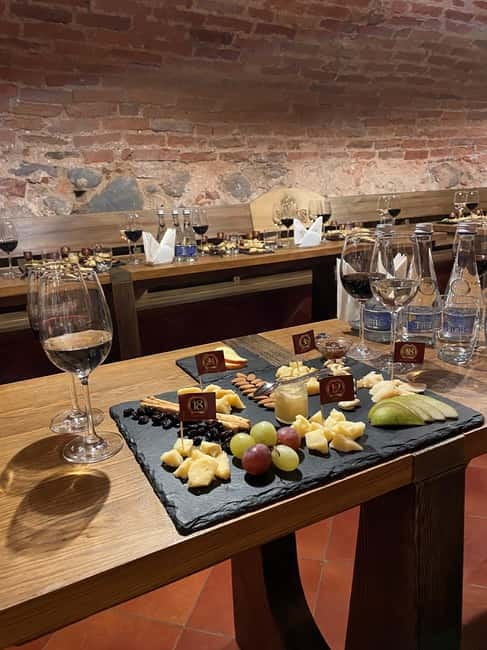
This is a 1.5-hour experience centered on tasting Lithuanian hard cheese and learning how people think about it. It’s not a long walking tour that accidentally becomes a food stop. Instead, you’re guided through a tasting format designed to make differences obvious.
You’ll sit down for a private tasting where you try cheeses aged 12, 18, 24, 36, and 48 months. Then you work through condiments and pairings—think sweet, fruity, and crunchy elements—while your taster adds the context: why cheese is eaten, how its culture developed, and what’s changing now.
And yes, there’s wine involved. You’ll sip branded white and red wine to go with the cheeses. That matters, because it turns the session from simple sampling into a controlled “taste test” you can actually learn from.
The Cheese Flight: How Aging Shows Up on Your Tongue
The core of the tasting is the age range. You’ll go from younger to older hard cheese, trying five points along the aging timeline: 12, 18, 24, 36, and 48 months. If you’ve ever wondered why one cheese tastes sharper or drier than another, this format makes that question easy.
Here’s what you can expect your palate to notice as you move through the ages:
- Savory strength increases as cheese matures
- A light bitterness can show up with older cheese (that’s part of the character)
- The texture shifts toward crispness, so you’ll feel it as much as taste it
Even if you’re not a “cheese person,” the tasting is structured so that small bites still add up to a big difference. The tasting description emphasizes that even a small piece is enough to satisfy because the flavors land with confidence—savory, slightly bitter, and textural.
One practical tip: eat slowly and reset between bites. With a flight like this, the learning comes from comparing, not rushing. If you bolt through it, the older cheeses can blur into the same overall taste.
Pairings That Turn Cheese From Food Into Flavors
A big reason this tasting feels valuable is the condiment strategy. You’re not just tasting cheese by itself. You’ll try exclusive combinations with a set of condiments that cover different flavor jobs:
- Honey for sweetness and roundness
- Nuts for crunch and a deeper, earthy support
- Grapes for freshness and fruit brightness
- Pears and apples for light, clean contrast
- Jam for a fuller sweet note that can amplify the cheese’s intensity
What I like about this approach is that it mirrors what you’d do at home—except you’re doing it with guidance. You can try multiple pairings so you discover what works for your taste. Some people love sweet with aged hard cheese. Others prefer fruit that doesn’t feel heavy. You’ll get enough chances to figure out your own answer.
And since you also get wine pairings, you’re effectively building a mini “cheese recipe book” in your head. White wine can help sharpen contrast, while red wine can stand up to stronger, older flavors. Even if you don’t consider yourself a wine drinker, you’ll still get the logic of why these pairings are chosen.
The Professional Taster’s Role: Stories You Can Use
This experience includes stories, not just product talk. You’ll listen to a professional taster who explains the history of cheese and how cheese consumption culture evolved. You’ll also hear about benefits of cheese and the latest trends.
That kind of commentary matters because it changes your attention. Instead of tasting “stuff,” you start noticing:
- How aging affects flavor and texture
- Why certain pairings make sense
- How cheese fits into daily culture, not just fancy dinners
I also like that the taster’s role is built into the timing. This isn’t a lecture you attend from across the room. It’s part of the flow: taste, listen, compare, taste again.
If you want to take something practical home, focus on what you personally prefer. The tasting gives you the vocabulary (aging, bitterness, crispness, savory strength). Then you can recreate your favorite combination when you buy cheese later.
Optional Old Town Tour: A Smart Add-On If You Want Context
The experience can include a 1.5-hour guided Old Town tour with a professional guide if you request it. That’s a useful option if you’re the type who enjoys food more when it’s tied to place and culture.
A short warning: the overall timing is tight. The tasting itself is described as lasting between 1 hour and 1 hour 30 minutes, and the activity duration is listed as 1.5 hours. So if you add Old Town guidance, plan to keep your energy up. Wear comfortable shoes and expect a compact format rather than a leisurely, open-ended stroll.
Still, if you’re in Vilnius County and want your visit to feel more grounded, pairing cheese tasting with Old Town context can make the day feel more complete.
Price and Value: Is $132 Worth It?
At $132 per person, this isn’t a bargain-basement snack stop. But it also isn’t just “cheese and wine” thrown together. You’re paying for:
- A private tasting led by a professional taster
- A structured lineup of five different cheese ages
- Multiple condiment pairings (honey, nuts, grapes, pears, apples, jam)
- Included branded white and red wine
- The cultural framing: history, benefits, consumption culture, and trends
So the value isn’t only in quantity. It’s in guidance and variety. You’re getting a controlled taste experiment that helps you learn what aging changes and which flavor combinations you enjoy most.
If you’re the kind of traveler who likes practical tastings—small bites, clear comparisons, and a story you can actually remember—this price starts to make sense. If you’re lactose-sensitive, not interested in hard cheese, or you just want a casual drink, you may find it too focused to justify the cost.
Timing, What to Bring, and How to Prepare
The session runs about 1.5 hours, and the tasting lasts 1 to 1.5 hours. That’s short enough to fit into a day without feeling like it steals your whole schedule, but it’s long enough to taste through five cheese ages and several pairings.
Bring:
- Comfortable shoes (especially if you request the Old Town guide)
- Snacks and water
Even though wine and cheese are included, having water on hand helps you reset between bites.
Also note the rules:
- Pets aren’t allowed
- Smoking isn’t allowed
Who Should Book This Cheese Tasting (and Who Should Skip It)
This experience is a great match if you:
- Love food tourism that teaches you something, not just “try a bite”
- Want a clear, structured tasting with a range of aging (12 to 48 months)
- Enjoy learning through pairings—sweet, fruity, nutty, and jammy contrasts
- Like wine pairings but don’t need to be a sommelier
It’s not a good fit if you:
- Have lactose intolerance (it’s listed as not suitable)
- Don’t handle stronger, aged hard cheeses well
- Want lots of walking or long sightseeing without a food-focused center
Should You Book This Lithuanian Cheese Tasting?
If you want a compact, high-signal food experience in Vilnius County, I’d book it. The tasting setup is doing exactly what you’d want from a cheese tour: a guided flight across ages, smart pairings, and a professional taster who explains the cultural and flavor logic.
Book it especially if you’re curious about how aging changes taste and texture, and if you like the idea of learning through contrast—new versus old, sweet versus savory, crisp bites versus fruit and jam.
Skip it if lactose intolerance is an issue, or if you only want casual sampling without wine, history talk, and multiple flavor combinations.
FAQ
Where does the Lithuanian cheese tasting happen?
It takes place in Vilnius County, Lithuania.
How long is the experience?
The activity lasts 1.5 hours, and the tasting session itself lasts between 1 hour and 1 hour 30 minutes.
What cheeses are included in the tasting?
You’ll taste 12, 18, 24, 36, and 48-month-old Lithuanian hard cheeses.
Is wine included?
Yes. You’ll sip branded white and red wine to accompany the cheese.
Can I request a guided Old Town tour?
Yes. A 1.5-hour guided tour of the Old Town with a professional guide is available upon request.
Is this suitable for lactose intolerance?
No. The experience is not suitable for people with lactose intolerance.
What should I bring?
Wear comfortable shoes, and bring snacks and water.