REVIEW · AMSTERDAM
Amsterdam Cheese and Wine Canal Cruise
Book on Viator →Operated by Boat Amsterdam · Bookable on Viator
Cheese and wine on the canal belt sounds right. This 1-hour cruise links a Dutch cheese and drink tasting with live guide narration, so you get sightseeing plus something to nibble while you float past the city’s most photo-heavy waterways. You’ll cover more ground than on foot, without the constant walking shuffle.
What I like most is the simple combo: cheese, wine, and beer are included. Second, I really enjoy the way the guide ties each stretch of canal to a specific place you can actually see from the boat, from the Herengracht view to the Jordaan and back toward the Amstel.
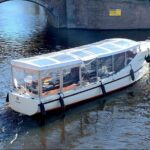
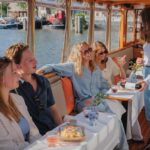
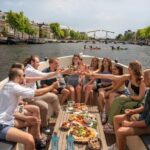
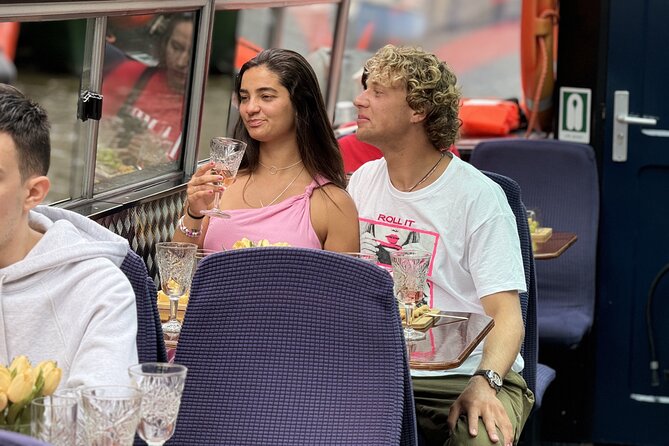
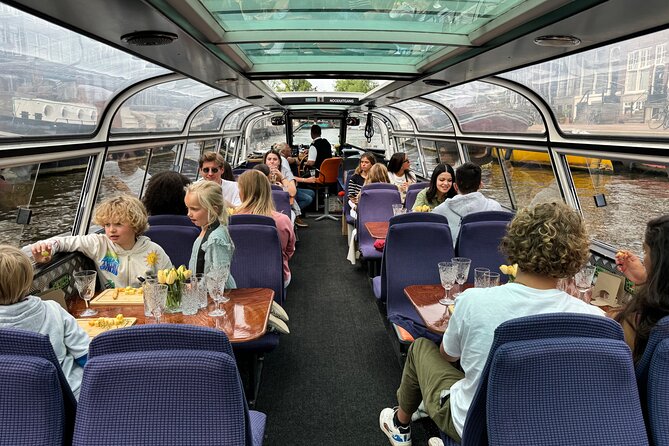
One thing to consider: the boat setup can vary. A couple of people flagged that some boats are open-air (with bench seating and limited table space), even if the photos suggest a more enclosed layout. If you need shade or have a mobility issue that makes holding a board tricky, think ahead and ask what type of boat your departure uses.
In This Review
- Key things to know before you go
- Cheese-and-wine cruise goals: what you’re actually buying
- Meeting at Amstel 51F: easy start, smooth flow
- On-board vibe: quiet canal time with narration
- The cheese and drinks: what’s included and how to use it
- Herengracht: the upper-class canal stretch you can read visually
- Reguliersgracht and the 7 bridges view: why it’s special
- Leliegracht to the Jordaan: garden streets and working-class design
- Prinsengracht #263 and Anne Frank’s house: seeing the setting from the water
- Westerkerk (Westerkerk) tower: Renaissance style plus that famous height
- Prinsengracht’s role: transitional canal between rich and working life
- Amstel Church and the quirky survival of a temporary building
- Skinny Bridge (Magere Brug): the old drawbridge that still works
- Hermitage Museum (Amstelhof): from nursing home to art annex
- Blauwbrug (Blue Bridge): the blue railings story and the matching crowns
- Price and value for about $45: a fair deal, with one caution
- Who this cruise suits best (and who should plan a workaround)
- Should you book this Amsterdam Cheese and Wine Canal Cruise?
- FAQ
- How long is the Amsterdam Cheese and Wine Canal Cruise?
- Where does the cruise start and end?
- What’s included in the cheese and drinks?
- Is there an English guide?
- Is transportation included in the price?
- Do you receive a ticket on your phone?
- How large are the groups?
- Can I cancel for a full refund?
Key things to know before you go
- Dutch cheeses plus drinks included: Heineken beer, wine, soda, coffee, and tea
- Seven Bridges is a real wow moment: a rare single-view stretch on the canal network
- You’ll get live narration in English from the in-person guide
- Small-group feel: up to 36 people, and some departures can feel very intimate
- Route hits classic areas fast: Herengracht, Jordaan, Prinsengracht, and the Amstel canal belt
Cheese-and-wine cruise goals: what you’re actually buying
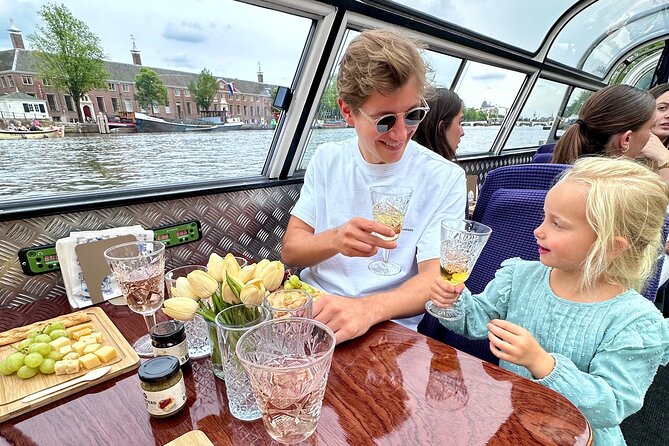
This is not just a cruise where food shows up at the end. The point is that you’re doing two Amsterdam classics at once: floating the canals and enjoying a proper Dutch tasting. For $45.01, that combination matters, because you’re getting drinks and cheese bundled into a time-efficient sightseeing plan.
The duration is about 1 hour, and you’re back at the meeting point after. That makes it a strong pick for your first day in the city, when everything feels like it’s at walking distance but your legs would rather be on pause.
You can also read our reviews of more tours and experiences in Amsterdam.
Meeting at Amstel 51F: easy start, smooth flow
The tour starts at Amstel 51F, 1018 EJ Amsterdam, and returns there. The address is in a central, canal-side spot, and the experience is marked as near public transportation, so you’re not forced into a long trek across town before boarding.
Also, you get a mobile ticket, so you can keep it simple on your phone. The group size tops out at 36 people, which helps keep the vibe from turning into a loud bus tour. And service animals are allowed, which is a useful detail if that’s part of your planning.
On-board vibe: quiet canal time with narration
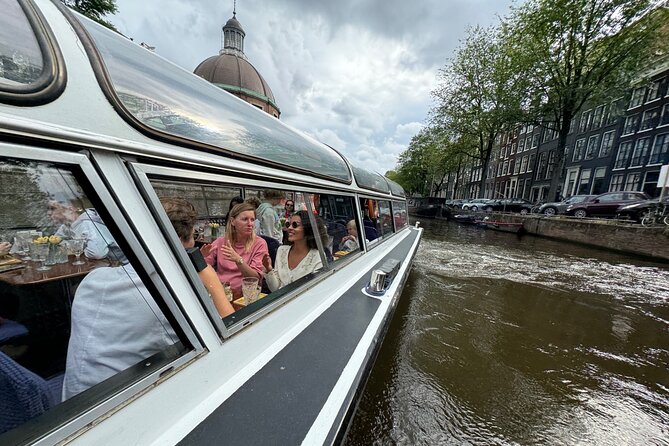
The single most practical benefit here is that your guide does the heavy lifting. As the boat moves along, you get live commentary in English (and the operator notes Dutch too). That means you’re not left guessing what you’re seeing—especially around the canal houses, churches, and bridges where the details can blur together if you’re just reading signs on land.
Several guides have been mentioned by name in the experience history, including Ronald, Lex, Tom, Berent, and Pippin. The common thread is the same: people highlight the guide’s ability to keep things relaxed while still explaining what you’re looking at and why it matters.
The cheese and drinks: what’s included and how to use it
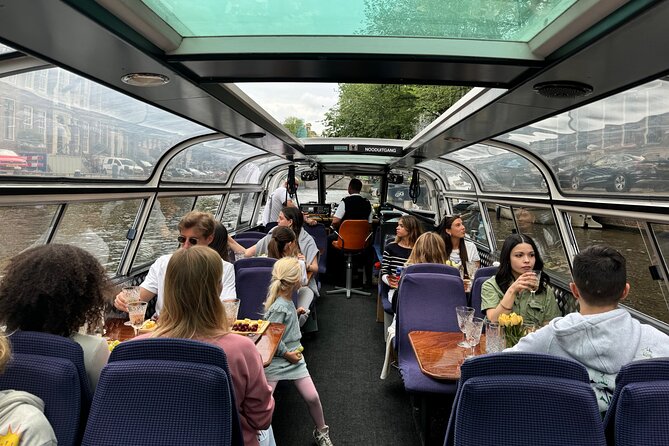
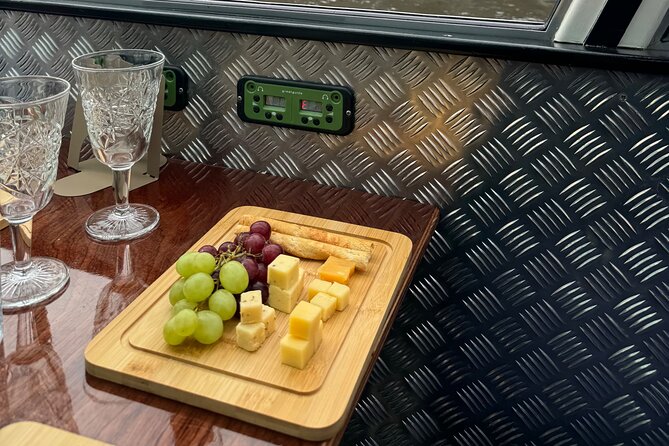
Here’s the core included package: Dutch cheeses plus Heineken beer, wine, soda, coffee, and tea. That’s a broad set of options, which helps if your group doesn’t all want the same thing. You can treat it like a tasting flight or like an easy, low-pressure snack break while you sightsee.
Practical tip: plan to pace yourself. Since you’re out on the canals for about an hour, it’s easy to go from curious to tipsy if you’re not careful, especially with wine. If you’re doing this as a first-night activity, consider starting with beer, soda, or tea, then switching as you settle in.
And since some people noted limited table space on certain boats, I’d treat the tasting as something you enjoy while you’re seated rather than something you spread out like a picnic. Bring a phone-safe strap or small bag so you’re not juggling items while the boat is moving.
Herengracht: the upper-class canal stretch you can read visually
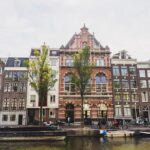
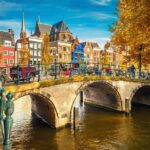
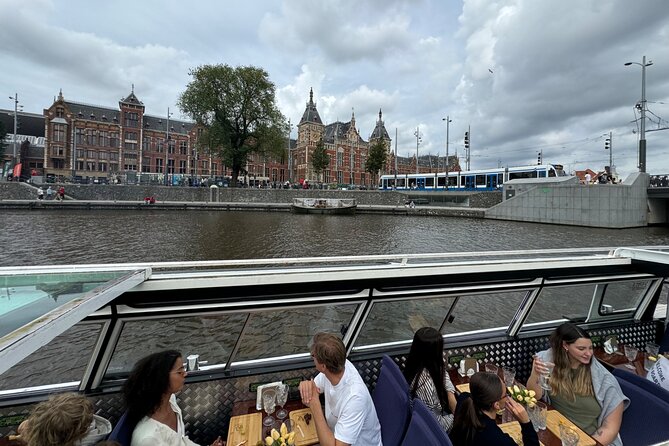
Your cruise begins along the Herengracht. This canal is part of Amsterdam’s famous canal belt—an area placed on the UNESCO World Heritage List in 2008—and it’s easy to see why from the water. Herengracht tends to feel more “grand” than the canals nearer to the working-class neighborhoods, and that shows up in the building scale and overall look.
Amsterdam’s canal belt stats help you put the place in perspective: 165 canals, about 100 km total, with an average depth around 2.6 meters. And there are 1680 bridges across them. (For comparison, Venice has only 400.) Once you hear that, the sheer number of bridges you pass stops being random and starts feeling like a system.
If you like photos, Herengracht is a strong first segment. You get the feel of the canal belt’s architecture before the route turns more into the “story” side of the city.
- Zaanse Schans Windmills, Clogs and Dutch Cheese Small-Group Tour from Amsterdam
★ 4.5 · 2,369 reviews
Reguliersgracht and the 7 bridges view: why it’s special
One of the most distinctive moments on this cruise is the stop at Reguliersgracht, often called the Seven Bridges area. The key detail is that it’s one of the only points where you can see seven bridges in a single view.
This is the kind of thing that’s hard to explain from the street because you’d need the exact angles at the exact time. From the water, it clicks. You can point your camera toward the line of bridges and actually frame the moment without sprinting around for better sightlines.
Leliegracht to the Jordaan: garden streets and working-class design
As you head toward the Jordaan, you’re moving through an area shaped by planning decisions that were pretty practical for their time. The Jordaan was designed for Amsterdam’s growing working class. The neighborhood name comes from the French word jardin, meaning garden, and that shows up in street names tied to plants and trees.
Here’s the visual difference you’ll notice if you look closely: houses are smaller and the street pattern feels different from other parts of the canal belt. One reason was cost control—the streets follow older ditch patterns that were already there, rather than building everything from scratch.
From a cruise perspective, the Jordaan is a good “contrast” stop. You see the city isn’t one uniform style. It’s layers—wealth nearby, everyday life nearby, and all of it connected by the canals.
Prinsengracht #263 and Anne Frank’s house: seeing the setting from the water
Next comes Prinsengracht #263, noted as the former home of Anne Frank, where her diary Het Achterhuis is associated. This is one of the stops that adds emotional weight to an otherwise easy, snack-and-sip cruise.
From the canal, you don’t get a museum experience. You get the location and the context, and the guide’s narration helps connect the building to the story. It’s a solid way to get oriented if you plan to visit the house later, or if you want a quieter introduction first.
Westerkerk (Westerkerk) tower: Renaissance style plus that famous height
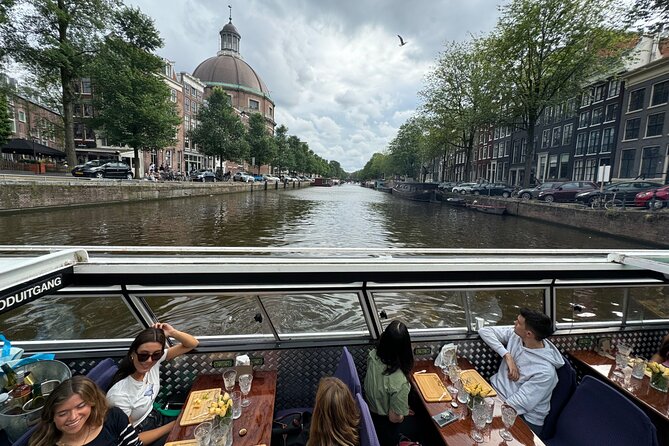
You’ll also see Westerkerk, built between 1620 and 1631 in Renaissance style. The tower is a big landmark: at 87 meters, it’s described as the highest church tower in Amsterdam.
There’s also a crown detail that’s easy to miss if you’re not listening. The imperial crown on top dates to 1637, and it’s tied to a gift from Maximillian I. The explanation links the crown to Amsterdam’s city arms and support in times of war—an example of how symbolism and politics lived right on the skyline.
From the water, this kind of church tower becomes a natural “anchor.” Even if you forget every canal name, you remember that tall outline and the way it frames the canals around it.
Prinsengracht’s role: transitional canal between rich and working life
The route also points out that Prinsengracht is relatively “modest” compared with other canals. Herengracht is associated with upper-class design, while Prinsengracht sits in between—built as a transitional canal moving toward working-class neighborhoods like the Jordaan.
The houses reflect that shift: on Prinsengracht, homes can look narrower and less decorated. It’s not just architecture trivia; it’s a useful lens. When you understand who lived where, the canal belt stops being a pretty postcard and starts feeling like a map of social history.
Amstel Church and the quirky survival of a temporary building
Toward the Amstel end of the route, you’ll see Amstel Church, dated 1668. The standout detail here is what it originally was: it started as a wooden temporary church for residents of the newly constructed canal belt.
The permanent stone plan apparently never got built, so the temporary structure remained for nearly 350 years. Today, it hosts cultural events. It’s one of those stories that makes you pause and laugh a little—Amsterdam kept a “temporary” fix so long that it turned into tradition.
Skinny Bridge (Magere Brug): the old drawbridge that still works
When you reach Magere Brug, also called the Skinny Bridge, you’re looking at one of Amsterdam’s most famous drawbridges. It’s described as the oldest still working, partly wooden drawbridge and a National Monument.
The original idea in the 17th century was practical and cheap: narrow enough that people had to pass carefully, or be very skinny. The current bridge dates to 1934, and cars have not been allowed since 2003. It’s also used in film settings, including James Bond.
From the cruise, the Skinny Bridge is where the canal scenery turns into a full-on Amsterdam signature shot. It’s narrow, photogenic, and tied to a real engineering story rather than just a pretty name.
Hermitage Museum (Amstelhof): from nursing home to art annex
You’ll pass by the Hermitage Museum in the Amstelhof. The building dates from 1681 and was originally a nursing home for around 300 years. In 2007, it was converted into a museum, with some rooms preserved and restored.
The museum is also an annex of the Hermitage in St Petersburg, sharing part of its art collection. Combined, the two Hermitages are described as having the largest art collection in the world.
This is a great stop if you like “how buildings change jobs” stories. You’re not just seeing canals; you’re seeing reuse.
Blauwbrug (Blue Bridge): the blue railings story and the matching crowns
Next is Blauwbrug, the Blue Bridge. Its name comes from an earlier drawbridge with blue railings. The current bridge dates to 1883 and was inspired by the Pont Neuf in Paris.
The background story is tied to timing: the World Exhibition in Amsterdam in 1883 is mentioned as the reason for a more grand-looking bridge. And again, there are imperial crown details. The crowns on Blauwbrug match those on Westerkerk and Amsterdam’s city arms, tied to Maximillian I and earlier imperial symbolism. The explanation even connects it to trade importance.
If you like spotting patterns, this is where Amsterdam’s symbols start repeating across different structures. The bridges aren’t random. They’re part of a wider message the city kept broadcasting.
Price and value for about $45: a fair deal, with one caution
At $45.01 per person for about 1 hour, this can feel like good value because the tasting is bundled. You’re paying for:
- a canal cruise with live commentary
- a defined food and drink portion (Dutch cheeses plus beer/wine/soda/coffee/tea)
If you were doing these items separately in Amsterdam, it would be easy to spend similar money just on drinks and a snack, without the guided canal experience. So the price works best when you want an efficient “do a lot in a little time” outing.
The caution is the boat setup variability. Some people said the boat style didn’t match expectations set by the photos, especially around whether it’s enclosed and how the tasting area is arranged. That doesn’t mean the tour is bad—it just means you should plan for it. If sun protection matters for you, bring what you need, or ask what kind of boat you’re assigned.
Who this cruise suits best (and who should plan a workaround)
This tour is a great fit if you:
- want an easy first-day canal view without a long walking loop
- like food and drink included with your sightseeing
- prefer guided storytelling that helps you interpret what you see
It may be less ideal if you:
- need a fully enclosed cabin or strong UV protection, based on the type of boat you’re assigned
- struggle with holding items while seated if your boat has no tables
A smart move: confirm what you’ll have on board (shade level, seating type, table availability). Then you can pack accordingly, so the experience stays comfortable.
Should you book this Amsterdam Cheese and Wine Canal Cruise?
I’d book it if you want a low-effort, high-reward canal hour with cheese and drinks included and a guide narrating the landmarks while you’re gliding past them. For $45.01, it’s a practical way to get the canal belt “hits” plus tasting time, all in one shot.
I’d be more careful if your comfort depends on a specific boat layout (shade, table space, or enclosure). Ask questions early, and you’ll be set.
FAQ
How long is the Amsterdam Cheese and Wine Canal Cruise?
It’s about 1 hour.
Where does the cruise start and end?
It starts at Amstel 51F, 1018 EJ Amsterdam, Netherlands, and ends back at the same meeting point.
What’s included in the cheese and drinks?
You get a selection of Dutch cheeses plus Heineken beer, wine, soda, and coffee and tea.
Is there an English guide?
Yes. The guide is provided in-person in English (and Dutch is also noted).
Is transportation included in the price?
No. Transportation is not included.
Do you receive a ticket on your phone?
Yes, you get a mobile ticket.
How large are the groups?
The maximum group size is 36 people.
Can I cancel for a full refund?
Yes. You can cancel for a full refund if you cancel at least 24 hours in advance.
You Might Also Enjoy



More Tour Reviews in Amsterdam
- Zaanse Schans Windmills, Clogs and Dutch Cheese Small-Group Tour from Amsterdam
★ 4.5 · 2,369 reviews