REVIEW · BARCELONA
Build A Catalan Charcuterie Cheese Board & Wine Pairing (V/VG Options)
Book on Viator →Operated by Savour Academy · Bookable on Viator
Cured meats and wine, in one smart evening. At Savour Academy in Sants-Montjuïc, you build a Catalan charcuterie and cheese board and then eat it as a proper meal, while the host guides you through wine pairings. I like how the session stays hands-on, even though it is a no-cooking class, and I also love that the wine notes are practical, not just theory.
One thing to consider: this is board-building, not learning to cook. If you’re hoping for real kitchen technique or a heavy cooking workflow, you might feel slightly underfed by the word cooking. Still, if you want a learn-and-wow skill you can copy at home, it hits the mark.
In This Review
- Key things you will notice
- Where Savour Academy Fits Into Your Barcelona Plan
- The Host Credentials You Can Feel in the Room
- A No-Cooking Cooking Class: What You Actually Do
- The Board Menu: Catalan Embotidos, Cheeses, Preserves, and Crunch
- The Wine Pairing Part That You Can Reuse at Home
- Vegetarian and Vegan Options: What to Ask For
- The Social Side: More Than Food, Less Than a Performance
- Price and Value: Is $106.04 Reasonable for 2 Hours?
- Practicalities That Matter for Your Evening
- Who Should Book This Workshop (and Who Might Skip It)
- Should You Book Build a Catalan Charcuterie Cheese Board & Wine Pairing?
- FAQ
- What is the meeting point for this workshop?
- What time does the experience start, and how long does it last?
- Is the workshop offered in English?
- Is this really a cooking class if it is no-cooking?
- Are wine tastings included?
- Can I request a vegetarian or vegan board?
- How many people are in the group?
- What is the cancellation policy?
- Is a mobile ticket provided?
Key things you will notice
- Small group setup up to 10 people for a more personal vibe
- Hands-on board assembly with clear steps, not a lecture
- Wine pairing guidance tailored to the flavors on your board
- Catalan focus using local, seasonal ingredients
- Veggie or vegan option available if you ask ahead
- You eat what you make, with enough food to feel like a meal
Where Savour Academy Fits Into Your Barcelona Plan
This workshop is set up for an easy evening routine. It starts at 8:00pm and runs about 2 hours, so it works well after a day of walking through the city. The meeting point is Savour Academy, Carrer del Farell, 12, bajos, in the Sants-Montjuïc area, and it’s near public transportation, which matters in Barcelona when plans change fast.
The room itself is designed for doing, not watching. You’ll be at tables, working with ingredients and building a board that you can actually serve later. And because the group maxes at 10 travelers, you are less likely to feel like a number.
You can also read our reviews of more tours and experiences in Barcelona.

The Host Credentials You Can Feel in the Room
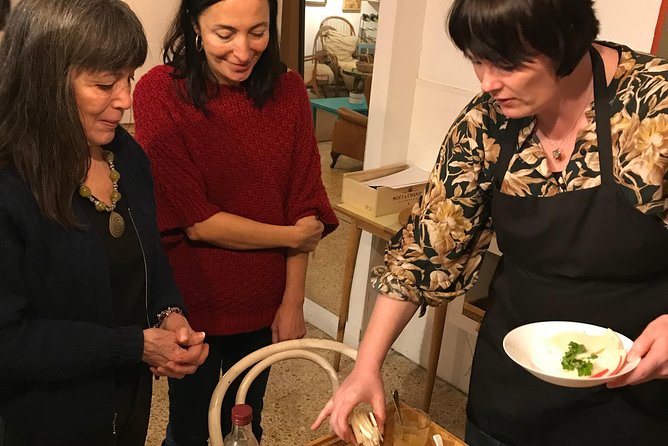
The class is led by Zara, and she brings proper wine training to the table. The workshop is described as being hosted by someone with a WSET Level 2 Certificate in wines plus a sommelier diploma from the Gremi de Restauracio de Barcelona, and her academy has been operating since 2017.
That background shows up in how the wine part is presented. Instead of treating wine like a mystery, the session aims to teach you how to think about pairing. You get tips you can use at your next dinner party, when you are standing in your kitchen holding a bottle and wondering what on earth to pair with the cheese you already opened.
A No-Cooking Cooking Class: What You Actually Do
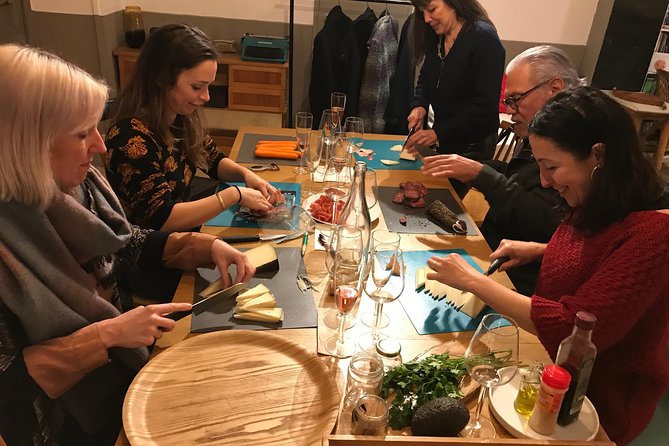
Yes, it’s a cooking class, but no, you are not going to be sweating over a stove. The workshop is described as a no-cooking cooking class, which is a big advantage if your travel schedule is packed or your cooking confidence is low.
Here’s the idea: you learn how to plan and build a Catalan board. You’ll work through the essentials and the steps to put ingredients together into something visually impressive. You also learn how to balance flavors and textures across the board, so it feels less like a pile of snacks and more like a real meal.
If you’ve ever hosted guests and thought, I want it to look good without stress, this is the right skill. You don’t need knife skills or recipes. You need good choices, good layout, and the confidence to pair them with wine.
The Board Menu: Catalan Embotidos, Cheeses, Preserves, and Crunch
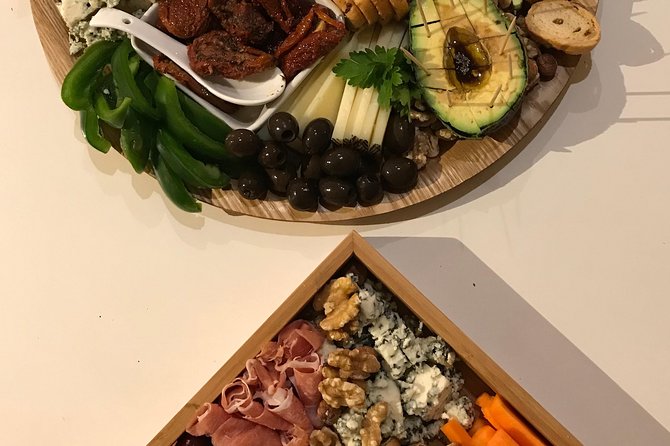
The board is built around classic Catalan and Spanish elements. You will create sections featuring Barcelona embotidos (cured meats), Spanish and Catalan cheeses, local preserves, and seasonal fruits and vegetables. There’s also the snack backbone: dried fruits and crackers.
Why this matters for you is simple: a great board is variety. You want different salty, fatty, sweet, and bright bites. The workshop’s lineup is designed to cover those bases with ingredients that belong together.
The class uses fresh local and seasonal ingredients, so you are tasting something tied to the time of year rather than a static menu that could belong anywhere. That seasonal approach is also part of why the pairing feels logical, because you’re matching wine with flavors that actually show up on the table.
The Wine Pairing Part That You Can Reuse at Home
After you build your board, the wine portion focuses on pairing. You get wine tastings plus tips on how to match wine with the cured meats, cheeses, preserves, and fruits you assembled.
You don’t need to remember a long list of rules. The useful goal is to learn how to think about pairing as a set of choices. For example, as you taste, you start noticing how wine can handle fat from cheese, how it can cut through salt from cured meats, and how it can play nicely with sweet notes from preserves or dried fruit.
What makes this section valuable is the way it connects directly to your board. You are not pairing wine to a theoretical dinner. You are pairing to real bites you made, in real time, on a table right in front of you.
Vegetarian and Vegan Options: What to Ask For
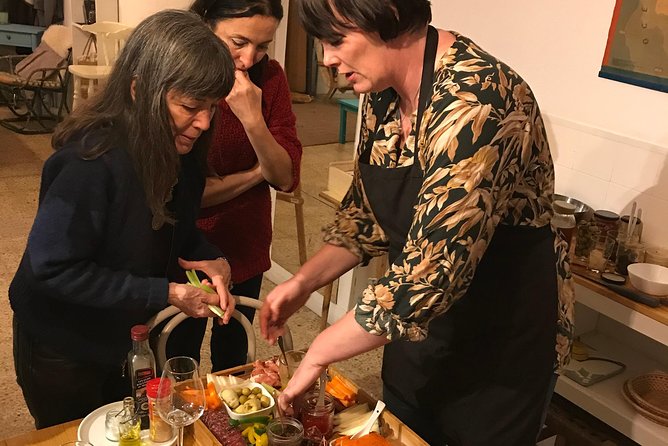
This workshop is not only for meat-and-cheese fans. The experience explicitly says you can ask about vegetarian or vegan options, which is a lifesaver if you are traveling with someone who eats that way or you personally prefer plant-based.
In the spirit of board-building, the veggie/vegan choice matters because you still want the same structure: creamy, salty, fresh, sweet, and crunchy. The workshop aims for that balance so the board still works as a meal, not a sad side platter.
Tip: when you book, ask about your preference early. The class is built around specific components, so you’ll get a better result when the host knows what you want from the start.
The Social Side: More Than Food, Less Than a Performance
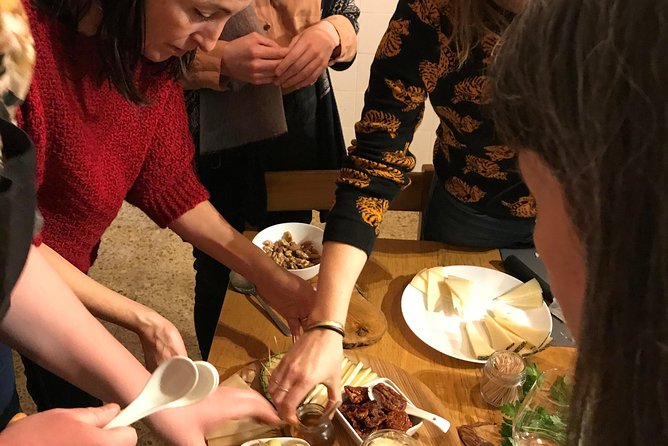
Food workshops can go two ways: either you end up watching someone work while you hold a glass, or you get a messy free-for-all. This one sits in the middle because the group is small and the format is practical.
In the experience, you’ll eat what you make in good company, and you’ll get stories of Barcelona along the way. That storytelling piece is not just fluff. It gives context for why these ingredients make sense in Catalonia and why local producers matter when you’re building a board that tastes like it belongs in Spain.
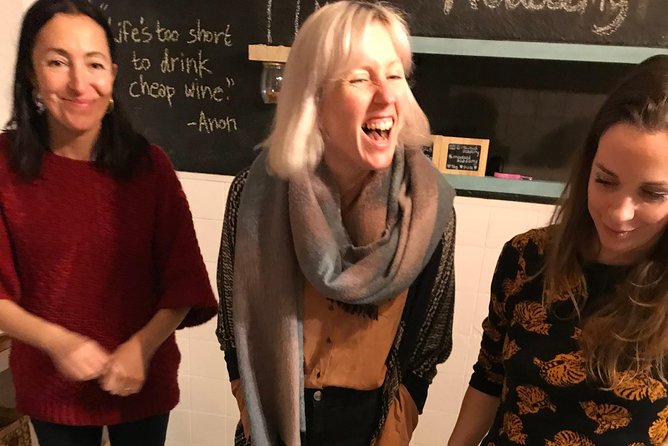
Also, you may meet people who are just as serious about food as you are, or people who came with zero plan and left with confidence. Either way, the tone is set up for sharing and laughing, which makes the whole evening feel relaxed instead of stiff.
Price and Value: Is $106.04 Reasonable for 2 Hours?
At $106.04 per person for about 2 hours, you are paying for several things at once: ingredient selection, guidance on assembly, wine tastings, and a meal-sized board at the end. You’re not just paying for a board, and you’re not just paying for a wine seminar.
The small group size helps value, because you get more attention and more interaction than you would in a bigger class. And the skill you walk away with is the real payoff. This is the kind of knowledge that can save you money after the trip, because you can host a good-looking board at home without turning it into a stressful grocery scavenger hunt.
If you love wine, this workshop also gives you pairing intuition. If you love hosting, it gives you a format you can reuse. If you’re simply hungry, you also get a satisfying meal portion, not just tiny bites.
Practicalities That Matter for Your Evening
This workshop runs on one block of time: 8:00pm start, and it ends back at the meeting point. That makes planning easier, especially if you want a post-class stroll.
You’ll get a mobile ticket, which is handy when your phone battery is already working overtime from mapping and photos. The experience is offered in English, which you’ll appreciate if your Spanish is still in the early stage.
Max group size is 10 travelers, and that tends to keep the pacing comfortable. You are never standing around waiting forever, and you are not rushed into finishing your board before the host moves on.
Who Should Book This Workshop (and Who Might Skip It)
Book this if you want:
- a host-ready skill for charcuterie boards
- a wine pairing lesson that you can actually use
- a small group evening with a friendly, focused tone
- an experience that works even if you cannot cook
Skip it if you want:
- real stove-top cooking instruction
- a long, guided tour around the city with stops and viewpoints
- a workshop that is purely meat-free unless you have already confirmed a veggie or vegan need
Should You Book Build a Catalan Charcuterie Cheese Board & Wine Pairing?
If your goal is to leave Barcelona with a practical party trick, plus a solid wine-and-snack education, I think it’s a strong booking. You get exactly what the format promises: board-building, wine tastings, and enough food to feel like dinner, all in about two hours.
It’s also a good fit if you like local, seasonal ingredients and want a Catalan-focused approach that you can recreate later. The only real caution is to go in knowing it is not a traditional cooking class. You are assembling and learning, not cooking from scratch.
FAQ
What is the meeting point for this workshop?
It meets at Savour Academy, Carrer del Farell, 12, bajos, Sants-Montjuïc, 08014 Barcelona. The location is near public transportation.
What time does the experience start, and how long does it last?
The start time is 8:00pm. The duration is listed as approximately 2 hours.
Is the workshop offered in English?
Yes. The experience is offered in English.
Is this really a cooking class if it is no-cooking?
It is described as a no-cooking cooking class. You focus on building a Catalan charcuterie and cheese board step by step, and then you eat what you make.
Are wine tastings included?
Yes. The experience includes wine tastings and tips on how to pair wine with the board.
Can I request a vegetarian or vegan board?
Yes. Vegetarian or vegan options are available if you ask in advance.
How many people are in the group?
The group has a maximum of 10 travelers, which keeps the session more intimate.
What is the cancellation policy?
You can cancel for a full refund if you cancel up to 24 hours in advance of the experience’s start time. If it is canceled because the minimum number of travelers is not met, you will be offered a different date/experience or a full refund.
Is a mobile ticket provided?
Yes. It includes a mobile ticket for the experience.