REVIEW · COLOGNE
Cologne-Nippes: Cheese and wine with champagne and Grand Cru
Book on GetYourGuide →Operated by koeln-fuehrungen · Bookable on GetYourGuide
Grand Cru evening starts with champagne. In Cologne-Nippes, I like the way the night flows from a champagne welcome into a serious, cheese-and-wine pairing lesson led by Karl, the sommelier who explains what you’re tasting.
This is also a night where the food and wine feel matched, not random. You’ll get a full tasting sequence (with water and bread to reset your palate), plus seminar-style info so you can keep the details after the last pour.
One drawback to weigh: the experience is German-only. If you’re not comfortable with spoken German, you may still enjoy the flavors, but the explanations will be harder to follow.
In This Review
- Key takeaways before you go
- Setting the mood: Le Caveau in Nippes and the first sips
- Champagne, amuse-gueule, and the Rivesaltes Ambré aperitif
- The main event: French cheese and wine pairings with Karl
- What you actually eat and taste
- How much wine are we talking about?
- The key value: you get pairing context, not just a list
- The Grand Cru finish: why the last pour feels like a payoff
- Weather, pacing, and group vibe in a 4-hour wine cellar setting
- Price in perspective: does $93 feel worth it?
- When to book in 2026 (and what sells out)
- Who this is perfect for (and who should skip it)
- Should you book? My honest take
- FAQ
- Where do I meet for the Cologne-Nippes wine and cheese evening?
- How long is the experience?
- Is this tour suitable for children?
- What language is the tasting guide in?
- What is included in the price?
- Can I cancel or pay later?
Key takeaways before you go
- Champagne opener plus an aperitif that sets the mood right away
- Karl’s pairing guidance makes the cheese and wine logic easier to grasp
- Seven French wines with a Grand Cru ending, not just a mid-course finish
- Eight-ish components in practice: cheeses, Jura add-on, salami or AOP cheese, olives, bread, water
- Cozy setting that can shift to the courtyard on good weather days
- Get the documents so you can remember what you liked and why
Setting the mood: Le Caveau in Nippes and the first sips
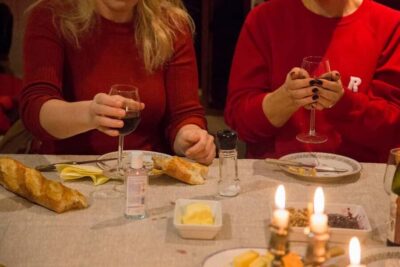
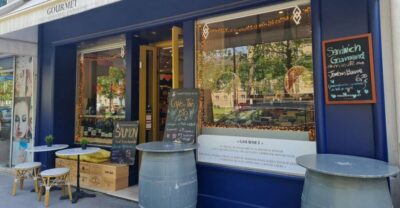
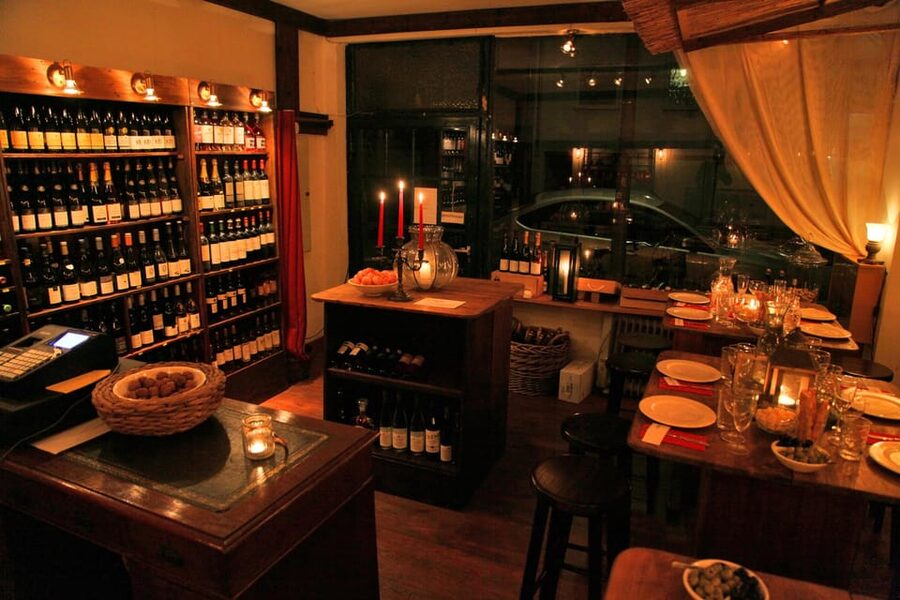
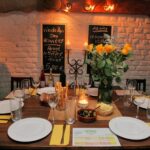
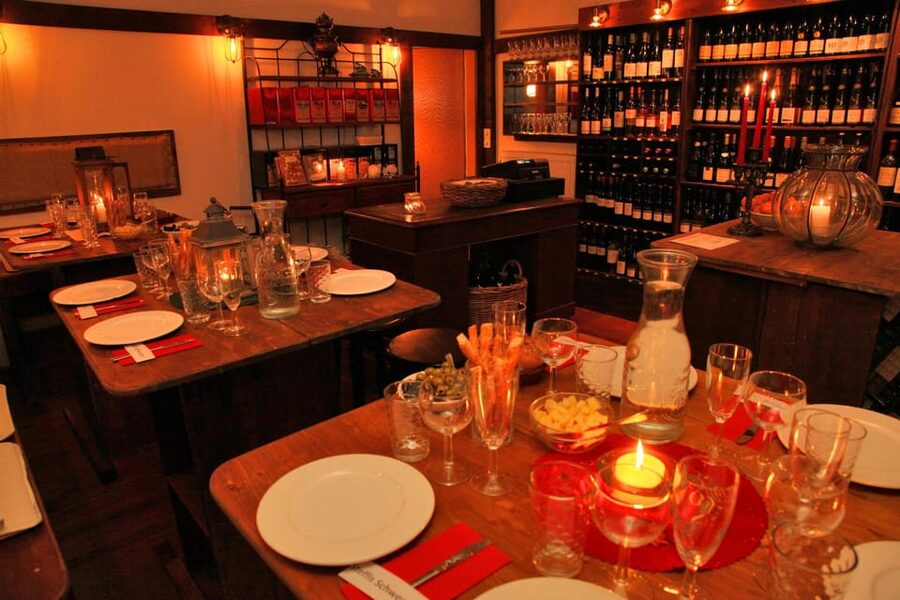
You meet in the courtyard of Le Caveau wine shop, 129 Mauenheimer Str. in Cologne’s Nippes. The vibe is intentionally intimate: candlelight, a wine-bar or wine-cellar feel, and a group atmosphere that’s more “shared lesson” than “sit-and-watch.” If the weather cooperates, the tasting can even happen in the courtyard, which adds a lot of charm on a mild evening.
The timing matters, too. It’s about 4 hours (270 minutes), so it’s not the quick, two-course version of a tasting. You get enough pacing for real conversation between tastings, and you’re not rushed into the next pour before your palate catches up.
And the start is smart: you don’t jump straight into wine. You begin with a welcome glass of champagne, plus an amuse-gueule to take the edge off and get your taste buds ready.
You can also read our reviews of more tours and experiences in Cologne.
Champagne, amuse-gueule, and the Rivesaltes Ambré aperitif
After the champagne, the evening shifts into appetite mode. You’ll get a small amuse-gueule with a matching aperitif: Rivesaltes Ambré. This isn’t just a random extra drink. In practice, it works like a palate warm-up and a flavor signal for what kind of evening you’re having: slightly richer, more aromatic, and built for pairing.
I like this part because it gives you something to do besides staring at menus. You can settle in, meet other wine lovers, and get the first round of flavors moving while Karl sets the tone for the tasting sequence.
The practical detail: water and bread are available during the evening to neutralize strong tastes. That matters with cheese. Even when you love the cheese, you’ll want those reset tools so the next pour stays clear and you don’t end up tasting only salt or only funk.
The main event: French cheese and wine pairings with Karl
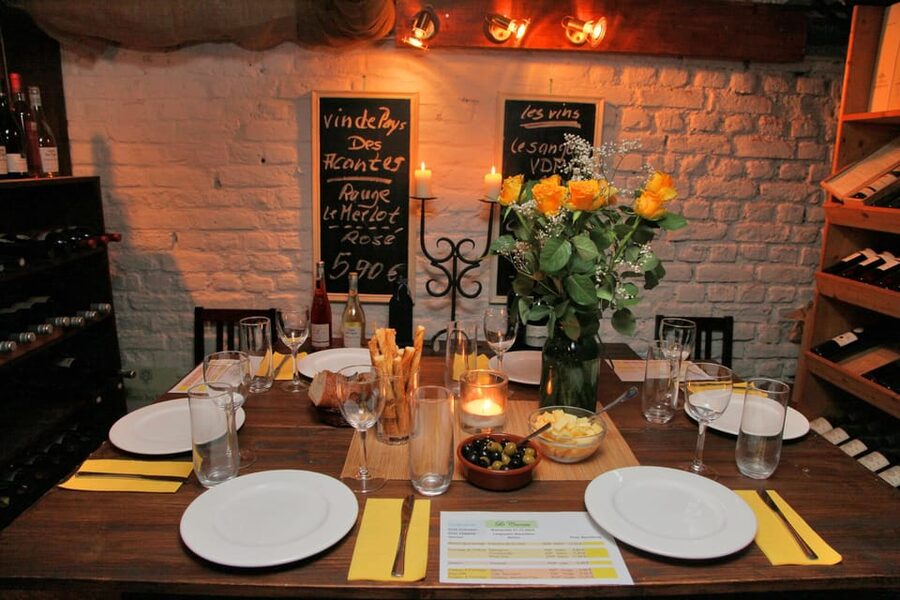
The centerpiece is a structured tasting of seven French wines, matched with seven French cheeses. On top of that, you’ll also have an extra Jura element: salami or an AOP cheese from the Jura, plus olives.
Here’s what makes it work for your palate: the pairing isn’t presented as a gimmick. It’s taught like a logic problem you can solve by taste. Karl talks through how flavors behave with different cheese styles, so you learn what to notice instead of only chasing which wine is “best.”
What you actually eat and taste
Across the evening, you’ll experience:
- Champagne to start
- Rivesaltes Ambré aperitif
- A small amuse-gueule
- 7 French wines (including the Grand Cru)
- 7 French cheeses
- Salami or Jura AOP cheese
- Olives
- Bread and water
That mix keeps things from feeling one-note. The olives and bread are simple but useful, because they help you manage acidity and salt so you can still taste subtle changes in the wine.
How much wine are we talking about?
Pace and volume can vary by hosting style, but expect meaningful pours, not tiny “just a sip” samples. One helpful heads-up from real-world experience: the glasses may come out almost full-sized, so this is more of a full tasting evening than a delicate teacup sampler.
The key value: you get pairing context, not just a list
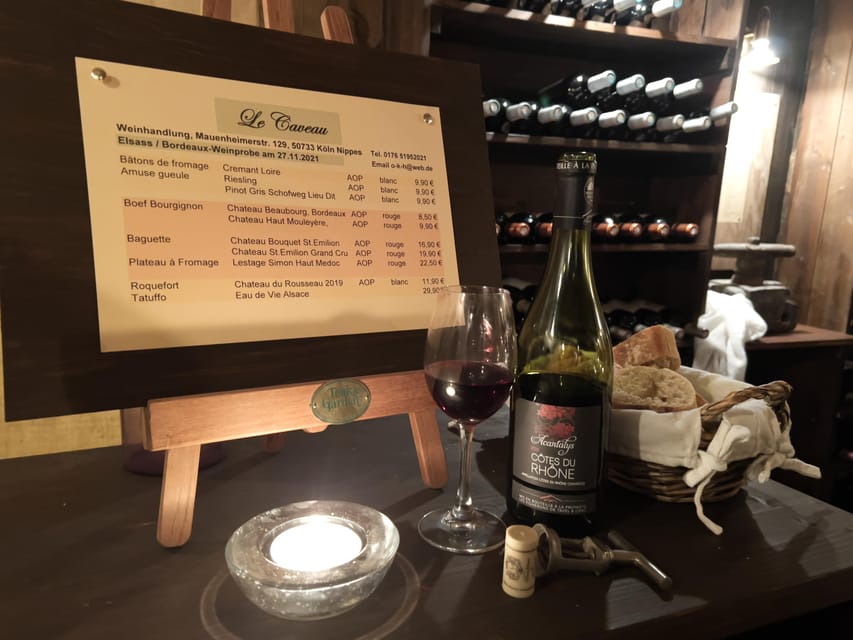
You’re given a list of the wines, dishes, and cheeses at the beginning, and you also receive seminar documents. That’s a big deal if you want to remember what you liked later or recreate the pairing at home.
But balance it with this: the quality of explanations can depend on how the night goes and how comfortable your group is in German. Some people love the depth and pairing clarity; others felt the wine talk focused more on the bottles than the tasting logic. If you want strong theory, arrive ready to follow German conversation, and don’t be afraid to ask questions when there’s a pause.
The Grand Cru finish: why the last pour feels like a payoff
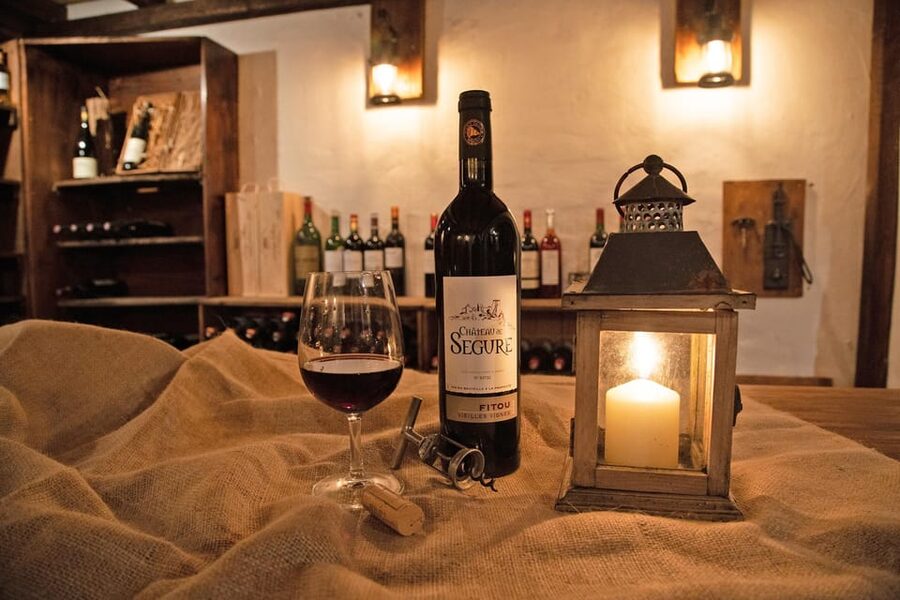
The evening concludes with an exclusive Grand Cru. In wine-tasting terms, a Grand Cru usually signals a higher tier and more character than a casual table bottle, but the real value here is the way it lands after the rest of the tasting.
By the time you reach the Grand Cru, you’ve already tasted multiple cheese styles and multiple wine styles. That changes your perception. Instead of tasting the Grand Cru in isolation, you can compare how it behaves against what you’ve eaten earlier. You also get a clearer sense of why the host is saving the best for last.
This is also where the atmosphere matters. Candlelight, good company, and calm conversation make the final course feel like a finish, not just another pour.
And since water and bread are on hand, you can keep the focus on flavor rather than on getting overwhelmed by intensity.
Weather, pacing, and group vibe in a 4-hour wine cellar setting
One of the nicest practical aspects is the schedule. You’re there for long enough to settle in, but short enough that it doesn’t feel like a long lecture. Karl’s hosting pace aims to keep the evening conversational, with time for exchange.
If the tasting is in the courtyard, you’ll likely notice a more relaxed mood. Indoors, it tends to feel more like a private cellar lesson. Either way, it’s built for people who want to talk about wine and cheese while they taste.
A note on comfort: since the language is German, your enjoyment depends on how much you can follow in real time. If you understand spoken German at an intermediate level, you’ll probably catch the stories and pairing reasoning as they happen. If not, you’ll still taste your way through a solid selection, but you might not fully get the “why” behind the choices.
Price in perspective: does $93 feel worth it?
At $93 per person, you’re paying for a guided, multi-item tasting that lasts around four hours and includes:
- Champagne
- Rivesaltes Ambré
- 7 French wines including a Grand Cru
- 7 French cheeses
- Jura element (salami or AOP cheese)
- Olives, bread, and water
- Seminar documents and a guide-led exchange
Is it a bargain? No. But it also isn’t a simple snack-and-drink evening. The price makes sense if you value pairing education, a sit-down format, and the included Grand Cru finish.
It also helps that you get materials at the beginning and documents afterward. You’re not just buying a night out. You’re buying the chance to learn how to think about wine and cheese together, and to leave with a reference list for future shopping and pairing experiments.
If you’re the type who already knows a lot and is picky about explanations, treat this as a wine-knowledge test in German. You may love it. Or you may want something more technical and bilingual. The value depends on whether the tasting teaches you something new, beyond the label.
When to book in 2026 (and what sells out)
The listed 2026 dates are:
- March 7 (fully booked)
- April 18
- May 23
- October 10
- November 14
Given the sell-out on March 7, I’d book earlier for the popular dates if you have flexible plans. If you want a private setup, there are options for private wine tastings from 8 people, available Monday through Thursday on request.
Who this is perfect for (and who should skip it)
This experience is best for you if you:
- enjoy French cheeses and want pairing guidance you can actually use
- like the idea of a structured tasting with a Grand Cru finish
- are comfortable in German at least at an intermediate listening level
- want a cozy, conversation-friendly night rather than a rush-through activity
It’s a weaker fit if you:
- need detailed wine explanations in English (none are provided)
- want a highly technical, purely classroom-style seminar
- expect all wine talk to be equally detailed for every person in the room
Should you book? My honest take
Book it if you want a four-hour Cologne evening where cheese and wine are the main event, and you’re excited to finish with a Grand Cru in a guided setting. The included pairing format, the documents, and the wine-and-food reset tools (bread and water) make it feel more intentional than a typical tasting.
Skip it or think twice if German is a struggle for you. The flavors will still be good, but the value drops if you can’t follow Karl’s stories and pairing logic.
If you fall in the middle—basic German only—go anyway only if you’re okay with it being more about tasting than learning. If you want both, make sure you can handle the spoken German.
FAQ
Where do I meet for the Cologne-Nippes wine and cheese evening?
You meet in the courtyard of the Le Caveau wine shop at 129 Mauenheimer Str., 50733 Cologne.
How long is the experience?
It lasts about 4 hours (270 minutes). The exact start time depends on the session availability.
Is this tour suitable for children?
No. It is not suitable for children under 18.
What language is the tasting guide in?
The live tour guide is German, and the experience content is German.
What is included in the price?
Included are champagne, the Rivesaltes Ambrée aperitif, 7 French wines (including a Grand Cru), an amuse-gueule, 7 French cheeses, plus salami or Jura AOP cheese, olives, bread, and water.
Can I cancel or pay later?
You can cancel up to 24 hours in advance for a full refund. You can also reserve now and pay later to keep your plans flexible.