REVIEW · PARMA
Parmesan Cheese Factory Tour & Tasting near Parma
Book on GetYourGuide →Operated by Slow Travel · Bookable on GetYourGuide
Parmigiano fans, this tour is pure gold. I like the chance to see traditional production up close near Parma, but timing matters because the production rooms are only open at 7:30 AM and 8:30 AM. I also love the tasting setup: three ages of Parmigiano Reggiano (15, 24, and 36 months) paired with regional wine, Parmigiano cream, and water. One potential drawback: at $65 per person, you’ll want to make sure the early slot lines up with your day.
The guides—often led by people like Giulia or Lorenzo—keep things lively and explain the process in English and Italian. The whole experience is tight and well-paced, and the group stays small (max 10), so you’re not lost in a crowd. If you’re coming for a slow, stand-around-your-own pace visit, you may feel a bit rushed by the 1-hour structure.
In This Review
- Key Things I’d Prioritize Before You Go
- Parmigiano Reggiano at Azienda Agricola Bertinelli: What You Get in 60 Minutes
- Timing Is Everything: Why the 7:30 and 8:30 Windows Matter
- The 40-Minute Guided Visit: Production Rooms and Aging Wheels
- The Video Lesson: A Quick Reset Before You Taste
- Tasting Parmigiano Reggiano at Three Ages (15, 24, 36 Months)
- Sustainable Farming and Animal Welfare: What You Learn Beyond the Cheese
- Group Size, Timing, and Comfort: What It Feels Like On the Ground
- Price and Value: Is $65 Worth It?
- Getting There from Parma (and How Not to Miss Your Slot)
- Who This Tour Suits Best (and When to Skip)
- Should You Book the Parmigiano Reggiano Factory Tour near Parma?
- FAQ
- What time can I access the production rooms?
- How long is the tour and tasting?
- What cheeses are included in the tasting?
- What drinks are included?
- Is the tour in English?
- Do I need to arrange transportation from Parma?
Key Things I’d Prioritize Before You Go
- Pick the 7:30 or 8:30 slot if you want to actually watch the production rooms in action
- Taste three real aging stages (15, 24, 36 months) and compare texture and flavor side by side
- See the aging rooms filled with hundreds of wheels—it’s not just a quick peek
- Expect a short video lesson after the walk-through, explained in multiple languages
- Plan for a family-friendly pace with seating and stroller access that works better than you might think
- Bring your appetite for wine pairing with Lambrusco or Malvasia and cool water breaks
Parmigiano Reggiano at Azienda Agricola Bertinelli: What You Get in 60 Minutes
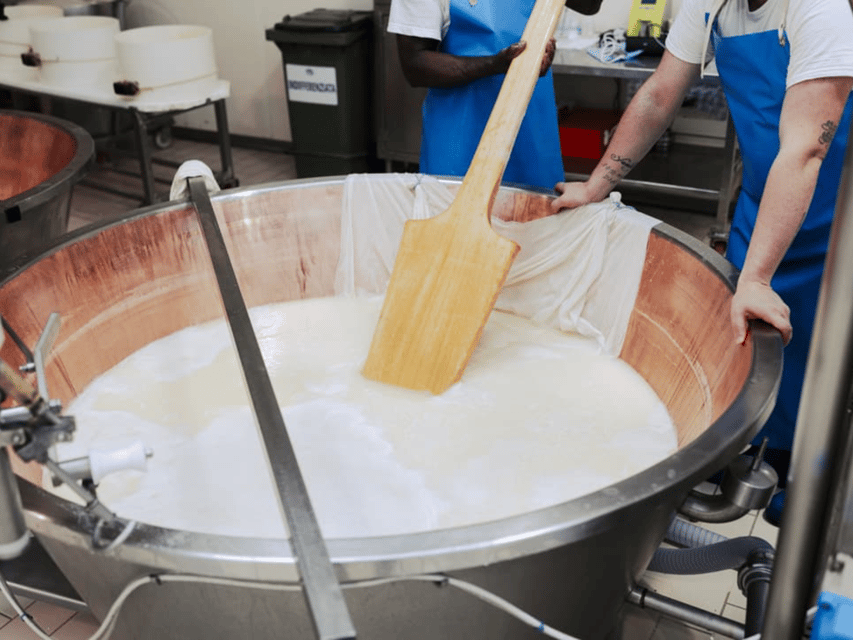
This is a focused, small-group Parmigiano Reggiano experience based at Azienda Agricola Bertinelli in Noceto, about 30 minutes from Parma. The total time is listed as 1 hour, with a guided visit of about 40 minutes and a tasting segment of about 20 minutes. That structure matters: you’re not spending half a day wandering. You’re getting the key parts—production, aging, and tasting—without filler.
What makes it worthwhile is the sequence. You first walk through how the cheese gets made and then move into the aging rooms, where the scale of Parmigiano production hits you. Finally, you taste three different ages so you can connect what you saw to what you’re eating. And because the tasting includes wine (Lambrusco or Malvasia), plus Parmigiano cream and water, you’re not just tasting cheese in a vacuum—you’re tasting it in a more real food context.
If you’re a foodie, this is the kind of tour that turns basic admiration into actual understanding. If you’re not a super-nerdy cheese person, you’ll still leave with a clear sense of what aging changes—because you taste it, not just hear about it.
You can also read our reviews of more tours and experiences in Parma.

Timing Is Everything: Why the 7:30 and 8:30 Windows Matter
The factory’s production rooms are only accessible during specific times: 7:30 AM and 8:30 AM. That’s the single biggest planning point, because it controls whether you truly see the traditional process live.
If you book a later slot (when production rooms aren’t accessible), you might still get the tour and the tasting, but the most hands-on “this is how it’s made” moment won’t be the same. So, when deciding what time to book, don’t think like a tourist choosing a convenient hour. Think like a cook choosing a class: you want the moment when the action is actually happening.
Practical tip: if your itinerary is flexible, I’d prioritize the earlier time. It also tends to make the day feel more “real Italy,” since you’ll be in the factory while Parma is still waking up.
The 40-Minute Guided Visit: Production Rooms and Aging Wheels
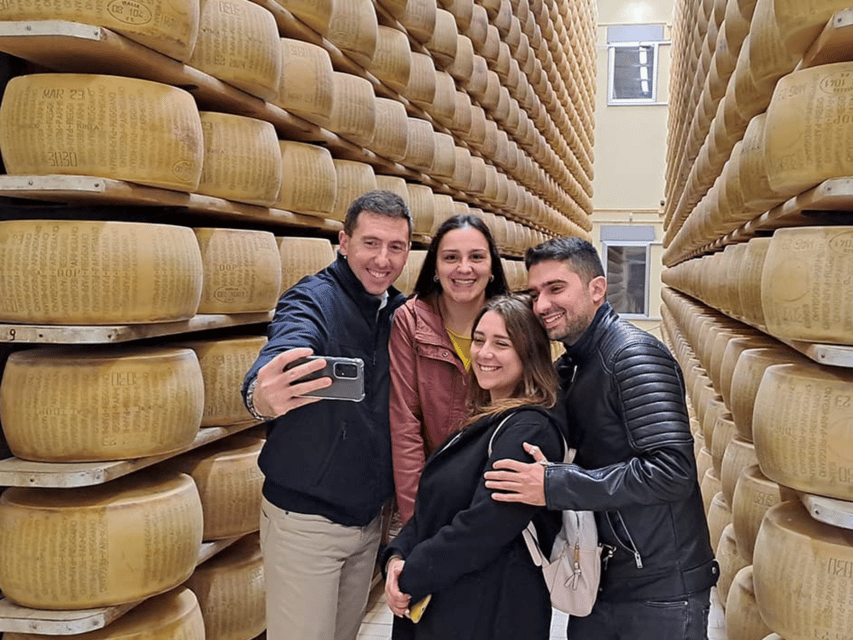
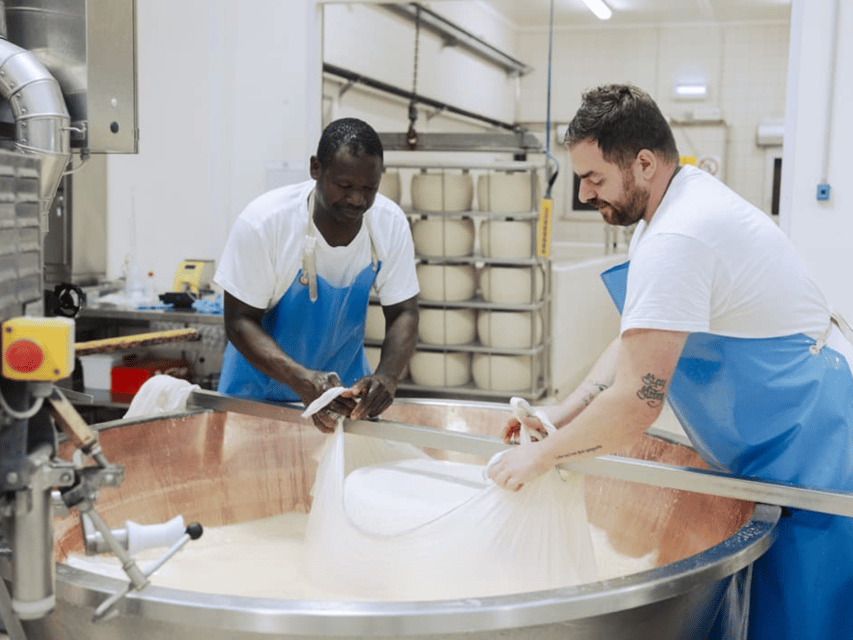
During the guided portion, you’ll start in the production rooms where artisans demonstrate the traditional techniques. The tour is built around the transformation from fresh milk into Parmigiano Reggiano wheels—curdling and shaping come up as part of the flow, and then you learn how the wheels get aged.
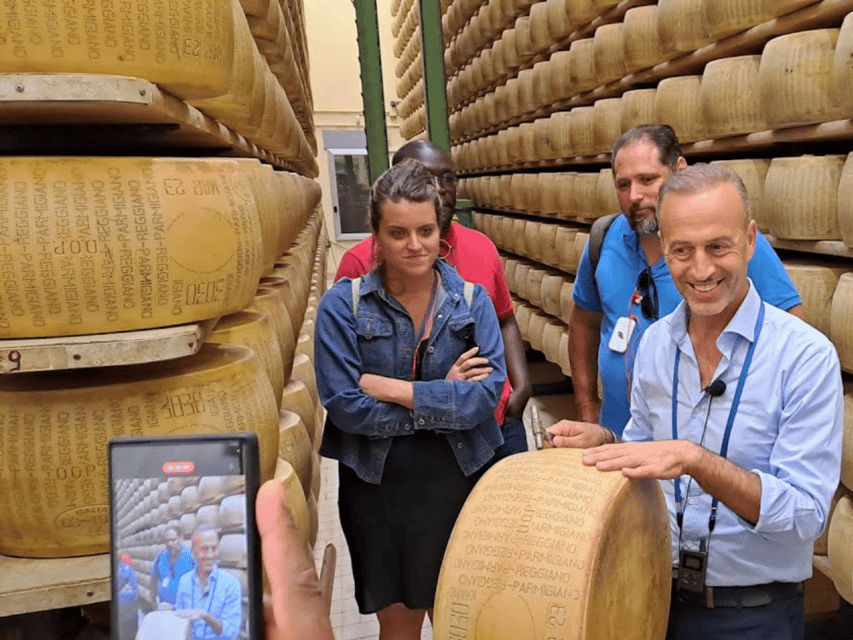
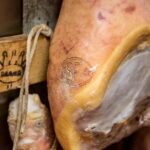
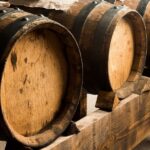
Then you move into the vast storage/aging rooms. This is where the experience turns visual. You’re walking through areas home to hundreds of carefully stacked cheese wheels, and you get a sense of how much time and space real Parmigiano requires. It’s one thing to read that Parmigiano is aged; it’s another to see that aging is the core business.
This part also tends to be where the guide shines. In the feedback I’m drawing on, the guides (including Giulia and Lorenzo) are praised for explaining clearly and making the material fun to follow. In a small group, that matters: you can hear the explanation and still look around, instead of rushing your photos while someone else talks.
One more point that’s worth mentioning: the tour is wheelchair accessible and stroller-friendly. In plain terms, the farm setup is structured enough that you can bring a buggy without it turning into a hassle.
The Video Lesson: A Quick Reset Before You Taste
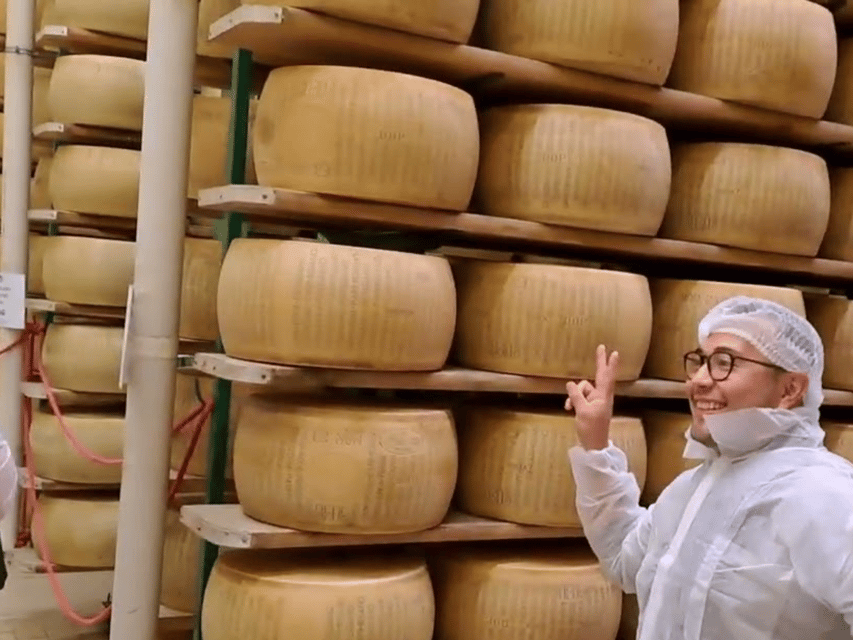
After the walk-through, there’s a video lesson explaining the process of Parmigiano cheese-making. It’s noted as available in different languages, which is a big help in a mixed-language group.
I like this timing. After you’ve walked through production and aging, the video helps connect the dots. It also gives you a breather before the tasting—your attention shifts from “watch and listen” to “taste and compare,” and it’s easier to pay attention if your brain isn’t still processing the last room.
Also, because the tour is limited to 10 participants, the video segment usually doesn’t feel like you’re crammed in. You can actually watch and reset.
Tasting Parmigiano Reggiano at Three Ages (15, 24, 36 Months)
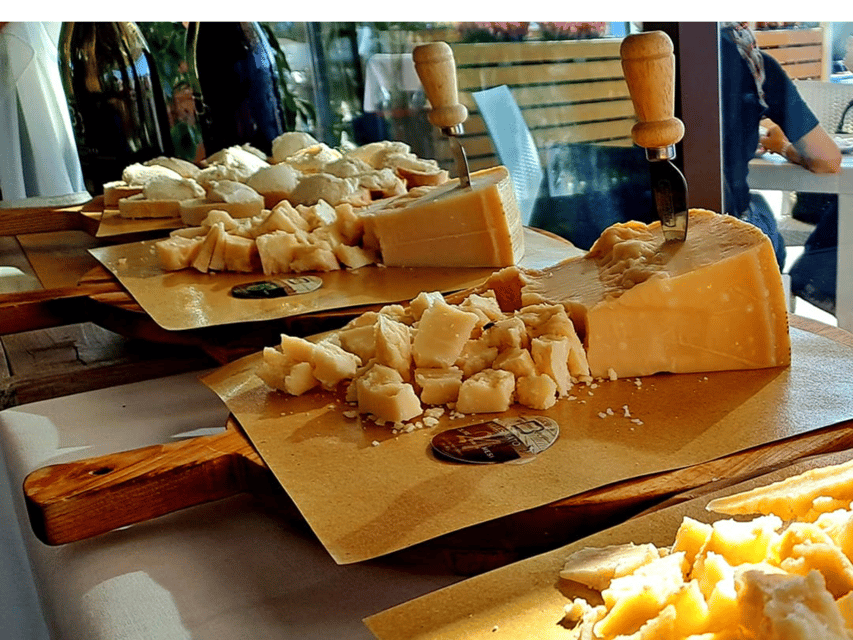
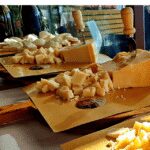
The tasting is the main event, and it’s structured in a way that makes comparisons easy. You’ll sample three distinct ages of Parmigiano Reggiano:
- 15 months
- 24 months
- 36 months
That range is perfect for beginners. You’re not tasting random “good cheeses.” You’re tasting aging as a progression. The main lesson you should take away is that aging changes both texture and flavor. So when you taste each one, don’t just judge it as “good” or “strong.” Think in terms of what you notice evolving from one age to the next.
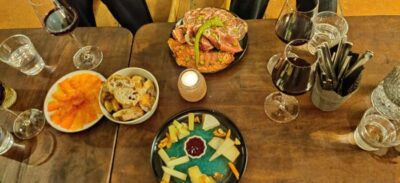
The tasting includes more than cheese. You’ll also get Parmigiano cream, a glass of regional wine—either Lambrusco or Malvasia—and water. This matters because it keeps the palate balanced. Wine pairing is especially helpful because it frames Parmigiano as something you’d actually eat with a regional meal, not just admire in theory.
If you like wine, you’ll probably enjoy the pairing component more than you expect. Several people highlight Lambrusco as the perfect match, with the tasting ending feeling like a complete mini experience rather than just a check-off at the end.

Sustainable Farming and Animal Welfare: What You Learn Beyond the Cheese
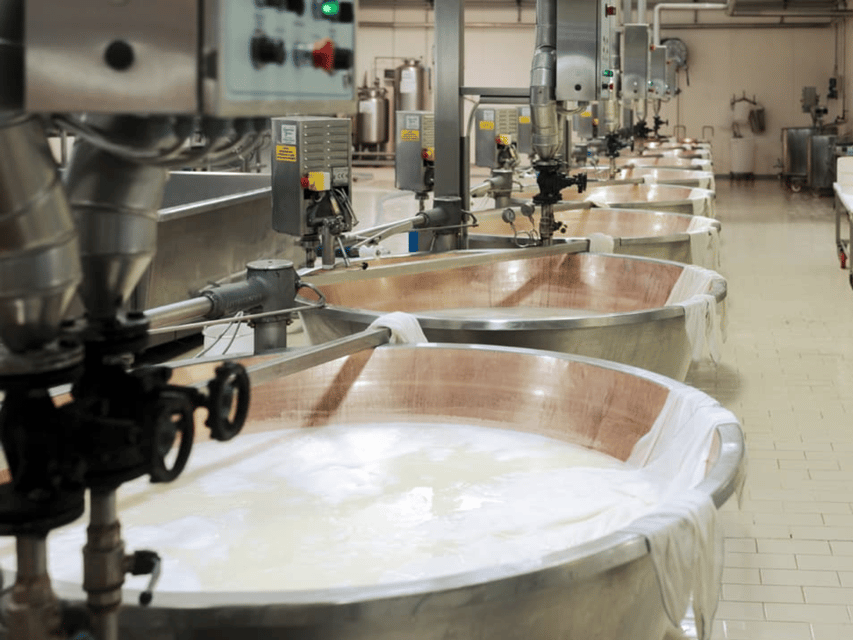
This tour doesn’t stop at dairy craft. It also covers sustainable farming and animal welfare practices. The farm operates with an emphasis on organic feed for Friesian cows and focuses on how the environment and food production connect.
I like including this piece because it changes your relationship with what you’re eating. Instead of treating Parmigiano Reggiano as a product that appears magically, you start seeing it as part of a system: the cows, the feed, the traditional methods, and the long aging cycle that turns milk into something shelf-stable and intense.
Now, don’t expect big political speeches. This is presented as practical farming and care, tied to the cheese-making process you just watched.
Group Size, Timing, and Comfort: What It Feels Like On the Ground
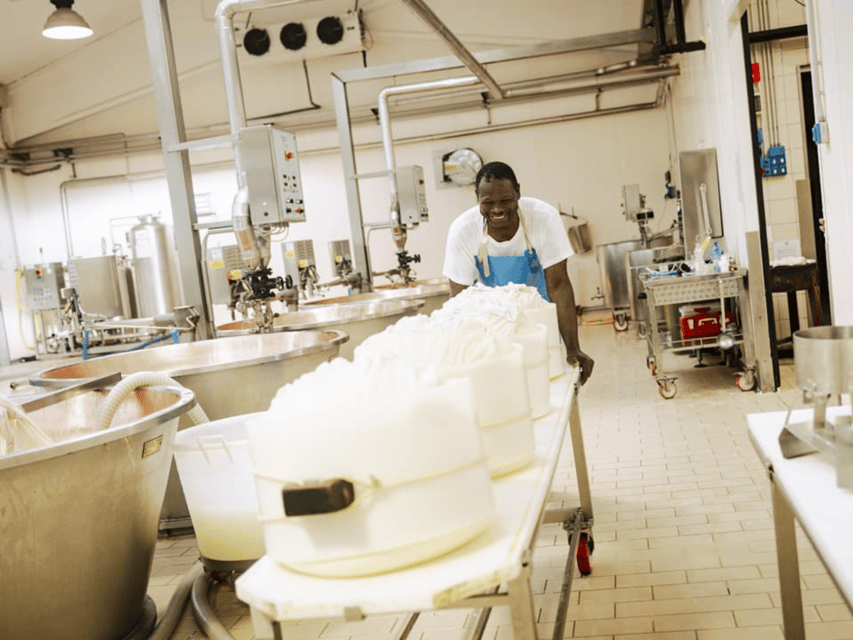
This is a small group tour, limited to 10 participants, with a live guide in English and Italian. That size is a huge deal. It keeps questions possible, makes the explanation easier to follow, and prevents the “walk fast, listen later” problem you get with bigger tours.
Pace-wise, it’s compact: 40 minutes of guided touring plus around 20 minutes of tasting. That’s why it works well as a morning activity when you want a cultural food experience without losing your entire day.
Family notes from the experience: it can work for kids too. One review mentions a 2-year-old and a 8-year-old doing well during the tour. Another mentions that a stroller/buggy can go along with you. If you’re traveling with little ones, that’s worth paying attention to, because factories can be chaotic in other places.
Price and Value: Is $65 Worth It?
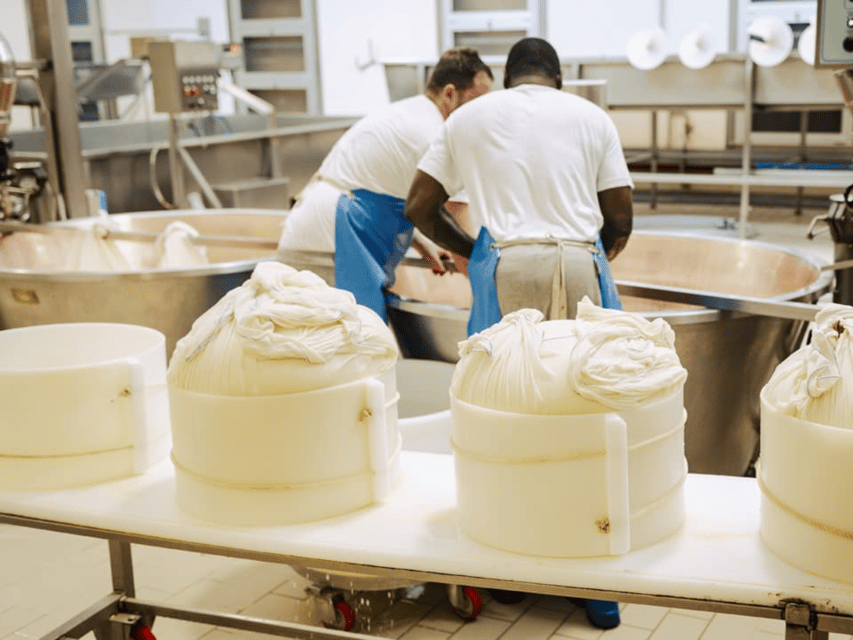
At $65 per person for a 1-hour tour, this isn’t a budget activity. But it’s not priced like a vague “tour of a building” either.
You’re paying for three things:
1) access to the production and aging areas, including the rooms with hundreds of wheels
2) a guided explanation in English and Italian
3) a tasting with three ages of Parmigiano Reggiano plus wine, Parmigiano cream, and water
The value improves if you book the slot that lets you see the production rooms at the right times. That’s the difference between tasting great cheese and understanding how it’s made.
There’s also a smart pricing tip from one of the experiences you provided: someone noticed it can be cheaper to book directly through the dairy’s own website. I’d treat that as “worth checking,” especially if you’re going with more than one person. The tour you’re reading about is still highly regarded, but a quick direct-price comparison can save you money.
And yes, a couple people point out it’s on the expensive side. My take: it feels fair if you’re here for food culture and you’ll actually use the tasting and explanation—not if you just want a quick souvenir stop.
Getting There from Parma (and How Not to Miss Your Slot)
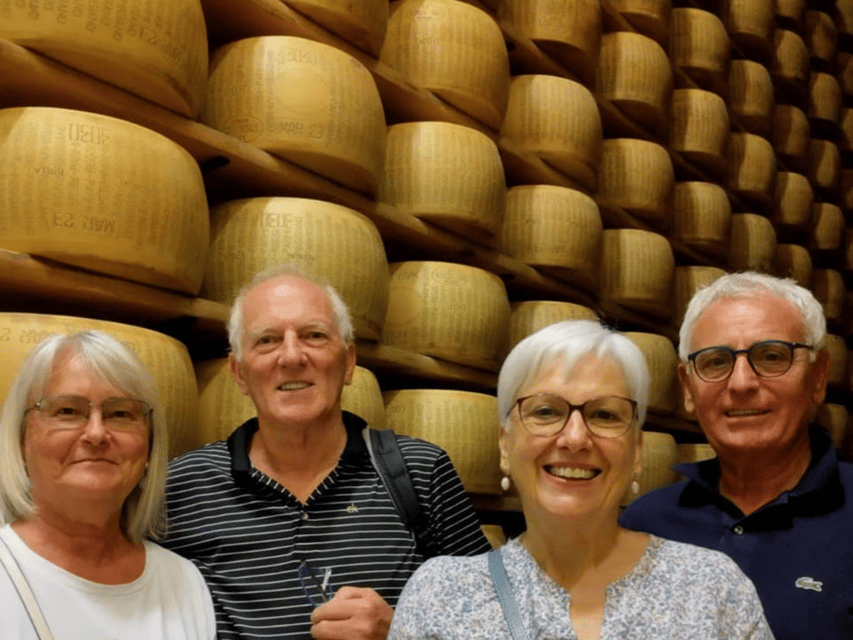
The meeting point is Azienda Agricola Bertinelli in Noceto. It’s about 30 minutes from Parma by car or public transport, and transportation to and from the site isn’t included.
That means your #1 logistics job is simple: plan to arrive early enough that you’re not sprinting to make a 7:30 or 8:30 access window. If you’re using public transport, give yourself extra buffer time. Factory tours are the kind of thing where being late usually means losing the best part.
Also, the tour runs in the morning structure tied to access. So plan your day around this rather than trying to plug it into a vague afternoon gap.
If you want flexibility, there’s free cancellation up to 24 hours in advance for a full refund, plus a reserve now & pay later option. That’s useful when you’re juggling trains, traffic, or your stomach’s patience with early mornings.
Who This Tour Suits Best (and When to Skip)
This tour is a strong fit if:
- you like food education more than trophy photos
- you want to taste Parmigiano at multiple ages and understand the difference
- you enjoy a guided experience with time to ask questions (small group helps)
- you appreciate regional wine pairings with food
It may not be for you if:
- you’re looking for a long, slow farm day with lots of extras beyond the tasting
- you hate early starts and can’t realistically make a 7:30 or 8:30 production access time
- you’re shopping primarily on price rather than experience
If you’re a first-time visitor to the Parma area, this is a high-impact stop. It gives you a clear “why Italy does this differently” feeling in just one hour.
Should You Book the Parmigiano Reggiano Factory Tour near Parma?
I think you should book it if you want a real, focused Parmigiano experience—production, aging rooms, and a structured tasting with wine. The biggest decision isn’t the $65 price tag; it’s your time slot. If you can catch the production rooms at 7:30 or 8:30 AM, do that. That’s where the tour feels most alive.
Before you commit, I’d also do one quick move: check pricing if you’re booking multiple spots, since there’s a hint it can be cheaper when booked directly through the dairy’s website. And if you’re bringing kids or a stroller, you’ll likely be in good shape here thanks to the way the experience is paced and set up.
If your goal is to leave with a deeper understanding of Parmigiano Reggiano—one you can actually taste—this tour earns its place on a Parma-area itinerary.
FAQ
What time can I access the production rooms?
The production rooms are only accessible during 7:30 AM and 8:30 AM.
How long is the tour and tasting?
The tour is listed as 1 hour total, with about 40 minutes for the guided visit and about 20 minutes for the tasting.
What cheeses are included in the tasting?
You’ll taste three ages of Parmigiano Reggiano: 15 months, 24 months, and 36 months.
What drinks are included?
The tasting includes a glass of regional wine (Lambrusco or Malvasia) and water.
Is the tour in English?
Yes. The live guide is listed as available in English and Italian.
Do I need to arrange transportation from Parma?
Transportation isn’t included. The factory is about 30 minutes from Parma by car or public transport.