REVIEW · AMSTERDAM
Classic Salonboat Tour in Amsterdam Including Cheese and Wine
Book on Viator →Operated by Captain Jack Amsterdam · Bookable on Viator
Skim past canals and cheese it up. This classic canal cruise mixes old-boat charm with real local stops, plus a guide who makes the city make sense. You’ll float through the historic canal heart and pick up stories you can use as you wander afterward.
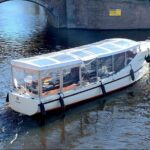
I especially like the classic salonboat feel: comfortable seating, clear windows for photos, and lots of room to move around. And I love the onboard Dutch cheese-and-wine setup, which turns a simple sightseeing hour into an actual Amsterdam snack moment.
One thing to think about: it’s about seeing from the water, not doing museum entries. So if you’re hoping to walk into places like Begijnhof or the Anne Frank House, this cruise won’t replace those visits, even though you’ll pass key sights.
In This Review
- Key highlights to look for
- A classic salonboat route that makes Amsterdam feel simpler
- Cheese and wine on board: a Dutch detour that’s actually worth it
- From Westermarkt to Magere Brug: the Skinny Bridge moment
- The canal ring loop: Prinsengracht, Keizersgracht, Herengracht—and why UNESCO matters
- Jordaan and the in-between streets: gardens, boutiques, and canal life
- Leidseplein, Spiegelkwartier, and the art-and-galleries view
- Churches, opera, and the dramatic Amstel riverfront
- Anne Frank’s area, plus a few landmarks you can’t ignore
- The Amstel’s bridges and squares: Blauwbrug, Rokin, and Amstelveld
- De Pijp, Rembrandtplein, and the art corners you’ll want to return to
- Tiny museums and big city quirks: ice, tulips, and monuments
- Practicalities that make this $41.06 hour feel like a deal
- Should you book this cheese-and-wine canal cruise?
- FAQ
- How long is the classic salonboat tour?
- What’s the price per person?
- Is the tour offered in English?
- What’s included with cheese and wine?
- Where does the tour start and end?
- How many people are on the tour?
- Do I need a printed ticket?
- Is good weather required?
- What’s the cancellation policy?
- Is this tour suitable for families?
Key highlights to look for
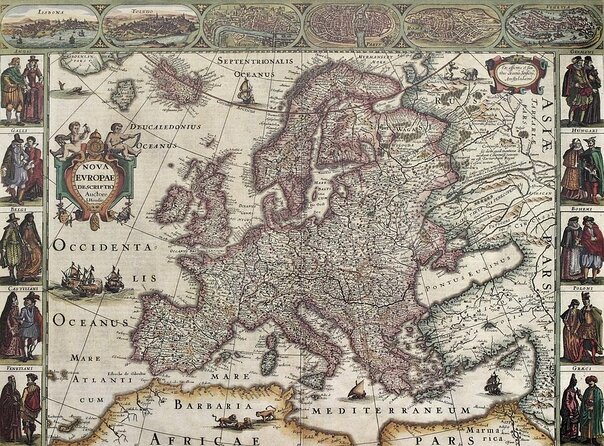
- Classic wooden drawbridge views at Magere Brug (the Skinny Bridge) from the Amstel
- Canal Ring World Heritage views around Prinsengracht, Keizersgracht, and Herengracht
- Cheese and wine on board as a relaxed way to handle an hour of city sightseeing
- A tight group size (max 25) that helps the guide keep the energy up
- Guides with comic timing, with named hosts like Greta, Faried, Fran, Dara, Jeroen, and Maxim listed in guide experiences
A classic salonboat route that makes Amsterdam feel simpler
Amsterdam is a city built out of water choices. On foot, you bounce between neighborhoods and bridges and you’re stuck doing directions in your head. On this cruise, you sit back and let the canals do the navigation. In an hour, you get a clear map of the city’s shape—where the canal ring sits, how the Jordaan sits inside it, and where the Amstel pulls everything outward.
The boat itself is the practical kind of romantic: you get that classic look, but also the comfort you want for a one-hour outing. The windows matter. The onboard setup is designed so you can see outside while you’re sailing, and there’s even mention of windows that can be adjusted for better views when weather gets annoying.
You can also read our reviews of more tours and experiences in Amsterdam.

Cheese and wine on board: a Dutch detour that’s actually worth it
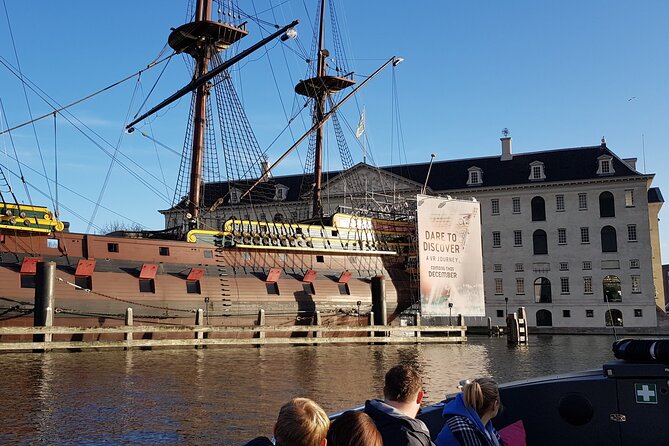
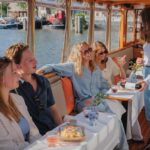
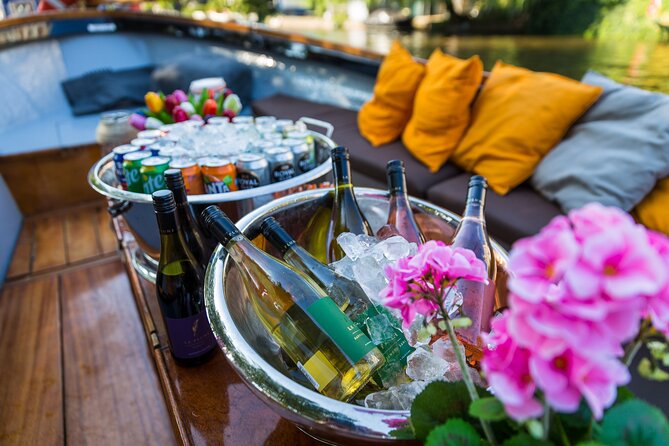
This isn’t a tiny afterthought snack. The cruise includes Dutch cheese and beverages, and the vibe is meant to feel like a proper onboard treat rather than a quick sip-and-go. That changes how the hour plays: you’re not just watching bridges, you’re also tasting something Dutch while the city slides by.
A good pairing tip if you’re picky: taste first, then follow the guide’s timing. Cheese can slow your brain down (in a good way), and it helps you remember what you heard. If you love food souvenirs, you’ll also likely use the Amsterdam Cheese Museum stop as a future “must-do” idea, because you’ll already have tasting context for Dutch styles.
From Westermarkt to Magere Brug: the Skinny Bridge moment
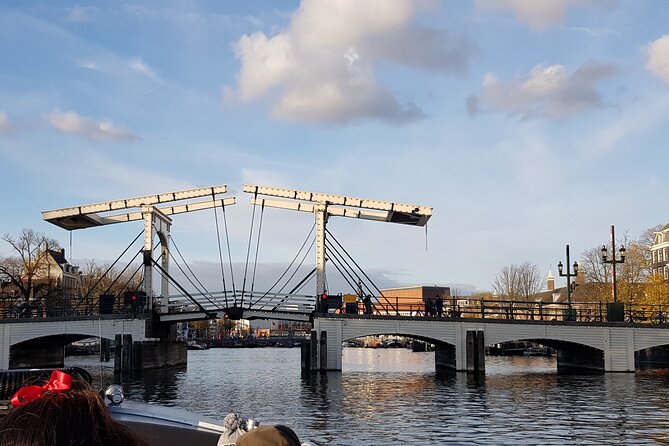
You start at Westermarkt 20 (1016 GV), and the route quickly turns into that signature Amsterdam feeling: canal walls, bridge angles, and houses stacked like they’ve been there forever.
One of the first big landmarks is Magere Brug—also called the Skinny Bridge. You’ll see the iconic wooden drawbridge over the Amstel area, and the guide’s explanation of its narrow history is the kind of detail that makes the bridge feel personal, not touristy. It’s also one of those spots where you’ll notice why locals call the Amstel central: the city’s founded connection to this waterway shows up again and again along the route.
This tour brings you past Magere Brug again too, so you get a second look that helps the bridge actually “stick” in your memory.
The canal ring loop: Prinsengracht, Keizersgracht, Herengracht—and why UNESCO matters
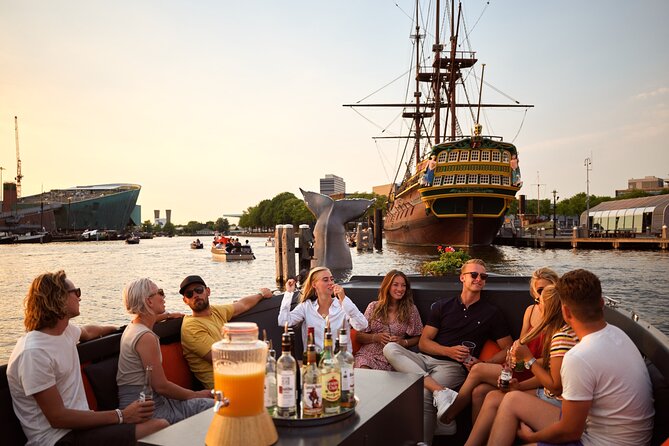
If Amsterdam feels like a maze, the canal ring is the shortcut to understanding it. The cruise frames the Grachtengordel—the concentric belts of canals built during the Dutch Golden Age—and you’ll hear how major canals like Prinsengracht, Keizersgracht, and Herengracht structure the city.
Here’s what you’ll notice from the boat even if you don’t memorize dates:
- Prinsengracht is the postcard canal for a reason. It runs through the neighborhoods people most associate with classic Amsterdam living.
- Keizersgracht and Herengracht reinforce the ring shape, so you start seeing the city in geometry, not random streets.
- You’ll see monumental canal houses along the way, which explains why this area became a UNESCO World Heritage Site in 2010 and why Amsterdam earned the Venice of the North nickname.
Stops you’ll pass while the guide keeps this big-picture story going include Prinsengracht itself, Keizersgracht (Emperor’s Canal), and Herengracht. You’ll also cruise alongside the Museum of the Canals, which helps tie the view to the city’s financial and daily-life story—how life worked behind all those canal facades.
Jordaan and the in-between streets: gardens, boutiques, and canal life
After you’ve got the canal ring frame, the cruise shifts toward the smaller-scale Amsterdam: canals with local neighborhood energy and side streets with their own identity.
You’ll pass through Jordaan, a neighborhood with an origin story tied to jardin (garden) and streets/canals named after trees and flowers. From the water, Jordaan feels like the city is scaled to humans—narrower canals, tighter views, and that “walkable but not boring” layout.
A few specific sights connected to this area that you’ll glide past:
- 9 Little Streets (Negen Straatjes): small boutiques, local restaurants, vintage shops. It’s the kind of place where you’ll want to hop off later and wander slowly.
- Bloemgracht and the flower market area nearby: tulip bulbs and souvenirs. Great if you like practical shopping, not just window shopping.
- Begijnhof: the private courtyard and chapel known for silence and strict group access. The cruise gives you the context, but don’t expect an organized group visit inside. Groups and excursions are closed, so plan on seeing it as a quiet landmark from outside and treating it as a later, respectful walk-in possibility.
Also in this stretch you’ll see the houseboat life angle. The Houseboat Museum is passed along the Prinsengracht, and the point is simple: you see how some Amsterdammers live, not just how the buildings look. If you’re traveling with kids, this is the part that often lands because it turns the canal into a “real-life home” lesson instead of a history lecture.
- Zaanse Schans Windmills, Clogs and Dutch Cheese Small-Group Tour from Amsterdam
★ 4.5 · 2,369 reviews


Leidseplein, Spiegelkwartier, and the art-and-galleries view
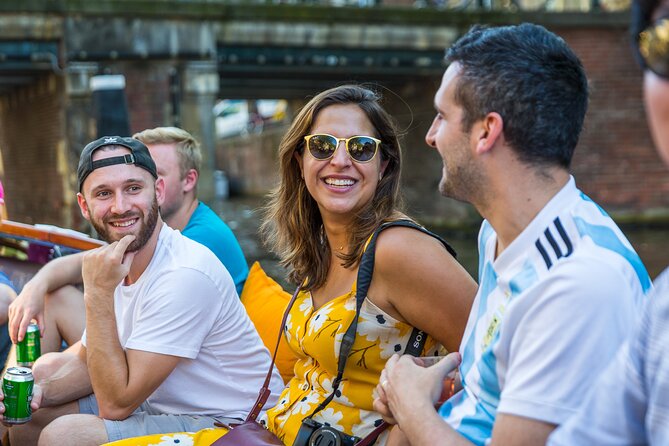
Amsterdam doesn’t only do old. It also does culture, shopping, and nightlife—without losing its canal look.
You’ll pass Leidseplein, one of the entertainment hubs with bars, restaurants, night clubs, and concert venues. From the boat, it’s easier to understand why people say Amsterdam has layers: you can be in a lively area and still be surrounded by water-based streets.
Then comes the Spiegelkwartier canal area, where you can see the big art draw from the canal—Rijksmuseum is visible from the Spiegelgracht. This is a good moment for photo lovers. The canal straightens the view and frames the museum energy without making you stand in a crowd.
If you like art browsing, the Spiegelkwartier galleries and antique-shop feel also makes sense after you’ve seen the canal connection between Prinsengracht and Lijnbaansgracht via Nieuwe Spiegelstraat.
Churches, opera, and the dramatic Amstel riverfront
The cruise doesn’t treat religion as a museum display. You’ll pass churches and theater buildings while the guide explains what they used to be and what they are now.
Examples:
- De Duif (Duifkerk): the church’s name tied to a 17th-century hiding church story, plus restoration history that brought murals back to light under later paint layers.
- South Church (Zuiderkerk): a Protestant church connection to Amsterdam’s expansion near the Nieuwmarkt area.
- Mozes en Aaronkerk and De Krijtberg (St Francis Xaveriuskerk): major Catholic church structures you’ll spot while the Amstel riverfront storyline keeps moving.
Then you shift into theater and performance landmarks:
- Koninklijk Theater Carré (Carré): a Neo-Renaissance building near the Amstel. It began as a permanent circus concept and today it’s linked to musicals, cabaret, and pop concerts.
- Dutch National Opera & Ballet in the Stopera area: a modern venue opened in 1986, designed specifically as a home for opera and ballet.
And because this cruise keeps feeding the “Amsterdam is built on water” idea, you’ll also pass H’ART Museum on the Amstel banks (a branch museum housed in the former Amstelhof building from 1681).
Anne Frank’s area, plus a few landmarks you can’t ignore
Some sights sit on top of Amsterdam’s identity. This cruise includes passing key Anne Frank references:
- the Anne Frank House hiding-place museum area (you’ll see it from the canal)
- the Statue of Anne Frank, which you’ll recognize instantly once you see it near the route
This doesn’t replace visiting the house itself. But seeing the surrounding canal setting from the water helps you understand how the neighborhood layout supported life there—quiet, tight, and tucked into the canal ring.
If you want a deeper visit later, this cruise can act as the “set the stage” moment before you enter the story in person.
The Amstel’s bridges and squares: Blauwbrug, Rokin, and Amstelveld
This is where you notice the Amstel behaves like Amsterdam’s backbone. You’ll see:
- Blauwbrug (Blue Bridge): connecting Rembrandtplein area with Waterlooplein area, and it sits south to the Stopera.
- Rokin: a street and water section between Dam Square and Muntplein, following the former course of the Amstel.
- Amstelveld: a central square with the Amstelkerk (wooden-dominant building) and a distinctive plantation of wingnut trees.
These are helpful stops because they give you “where am I?” anchors. After the cruise, when you’re walking streets and searching for a bridge, these place names can save you time.
De Pijp, Rembrandtplein, and the art corners you’ll want to return to
Once you’re out in the more mixed-use side of central Amsterdam, the cruise sweeps past neighborhood energy rather than just heritage walls.
You’ll pass:
- De Pijp, including the vibe around the Albert Cuyp Market area where Dutch specialties like herring and syrup waffles are associated.
- Rembrandtplein, a central square surrounded by streets that feed into it.
- Cat Cabinet, an art museum entirely devoted to cats, where artwork includes multiple famous artists.
- Willet-Holthuysen Museum, a canal house with furnished period rooms that show what a chic canal-side life looked like in the 18th and 19th centuries.
I like these pass-bys because they work like a bookmark. You get names and locations so you can choose what to do next day, instead of trying to memorize a map from scratch.
Tiny museums and big city quirks: ice, tulips, and monuments
Amsterdam’s canal world includes a few odd-but-fun stops you can spot from the boat:
- Amsterdam Icebar: a bar kept at around -10 °C with everything made of ice.
- Amsterdam Tulip Museum: shows tulip history from Central Asia to the present.
- The Cat Cabinet (already noted) and Amsterdam Museum: the city’s own history museum, formerly known by another name.
- Gay Monument (Homomonument): three pink granite triangles at the Westermarkt area.
You’ll also glide by Andaz Amsterdam Prinsengracht, by Hyatt, a modern luxury hotel on the canal—useful as a landmark if you plan later sightseeing toward the museums near the canal.
Practicalities that make this $41.06 hour feel like a deal
At about $41.06 per person for roughly one hour, the value hinges on two things: you get a guided canal route plus food-and-drink. If you were to build this day yourself—getting a boat view, paying for cheese tasting, then organizing a coherent route—you’d likely spend more and still end up with less structure.
Other practical wins:
- English is offered, so you’re not stuck guessing at signage.
- Maximum of 25 people helps the guide keep the story going.
- Mobile ticket means less hassle than printed slips.
- Near public transportation, which matters because Amsterdam walking can be quick and also slow your feet down fast.
One tip from the vibe on board: if the weather is doing its thing (wind, rain, glare), ask the crew about seat/window adjustments. People describe the clear-window setup and staff responding to requests to change blinds for better views. It’s a small move that can make photos way better.
Should you book this cheese-and-wine canal cruise?
Yes, if you want Amsterdam in one easy hour with a guided storyline you can carry into the rest of your trip. I’d book it when you’re landing late, when you’re short on time, or when you’re tired of walking but still want the big sights to click.
Skip it only if you want a hands-on, entry-heavy experience. This is a from-the-water tour. You’ll pass the Anne Frank area, churches, theaters, and multiple museums, but you won’t be treated like you’re hopping in and out of them.
If you like your sightseeing with comfortable boat views and Dutch cheese-and-wine as the payoff, this is a strong choice.
FAQ
How long is the classic salonboat tour?
The tour runs about 1 hour.
What’s the price per person?
It’s $41.06 per person.
Is the tour offered in English?
Yes, English is offered.
What’s included with cheese and wine?
You’ll enjoy Dutch cheeses and beverages as part of the onboard experience.
Where does the tour start and end?
It starts at Westermarkt 20, 1016 GV Amsterdam, Netherlands and ends back at the meeting point.
How many people are on the tour?
This activity has a maximum of 25 travelers.
Do I need a printed ticket?
No. You get a mobile ticket.
Is good weather required?
Yes. The experience requires good weather. If it’s canceled for poor weather, you’ll be offered another date or a full refund.
What’s the cancellation policy?
You can cancel for a full refund up to 24 hours in advance.
Is this tour suitable for families?
It may be a good fit for families, especially because the route includes passing the Houseboat Museum, described as fun for kids.
You Might Also Enjoy


More Tour Reviews in Amsterdam
- Zaanse Schans Windmills, Clogs and Dutch Cheese Small-Group Tour from Amsterdam
★ 4.5 · 2,369 reviews