REVIEW · BUDAPEST
Hungarian Wine Tasting (with Cheese and Charcuterie) in Budapest
Book on Viator →Operated by Taste Hungary · Bookable on Viator
Budapest’s wine cellar setting makes the tasting feel special. You’ll get five Hungarian wines paired with cheese and cured meats in a 19th-century cellar, plus a guide who can answer questions about grapes and regions. If you enjoy food that actually fits the wine, this is an easy win for a mid-afternoon plan.
One thing to keep in mind is quantity and pacing: the charcuterie board can feel a bit light for some people, and on a busy schedule you might feel gently rushed to move to the next group.
Key highlights at a glance
- 19th-century vaulted cellar setting that makes the tasting feel like a real event
- Five glasses of Hungarian wine with a focus on indigenous grape varietals
- Cheese and charcuterie revival story after the Communist era, explained in plain terms
- Hands-on pairing: bread and mineral water included, communal tables for mingling
- Small group size (max 24), so your questions usually have a chance to land
In This Review
- Entering Budapest’s 19th-Century Wine Cellar
- What You Actually Taste: Hungarian Grapes and Regional Styles
- Cheese and Charcuterie Pairings That Make the Wine Make Sense
- Step-by-Step: How the 90-Minute Taste Hungary Session Flows
- Stop 1: Taste Hungary
- Value in Plain Math: Why This $50 Tasting Works
- Who This Fits Best (And Who Might Want Another Option)
- A Practical Take on Pace, Board Size, and Comfort
- Should You Book This Hungarian Wine and Cheese Tasting?
- FAQ
- How long is the Hungarian Wine Tasting with Cheese and Charcuterie in Budapest?
- Where does the tasting start?
- Is the tasting offered in English?
- What’s included in the price?
- Is there a minimum age requirement?
- Are vegetarians able to join?
- How big is the group?
- Do I need to know wine before I go?
Entering Budapest’s 19th-Century Wine Cellar
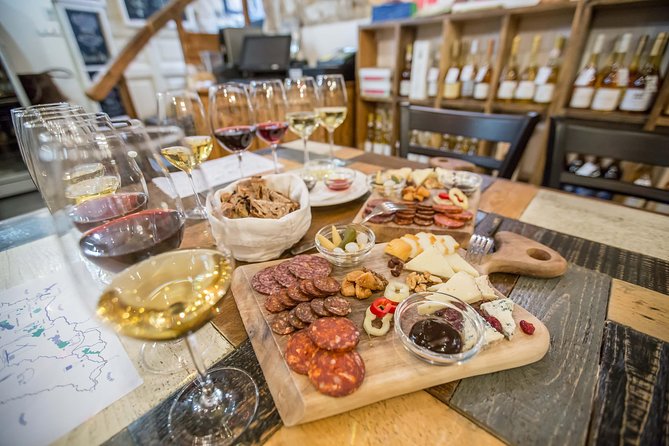
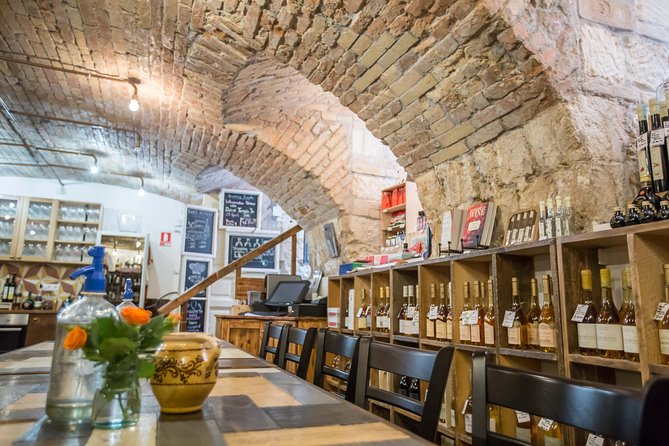
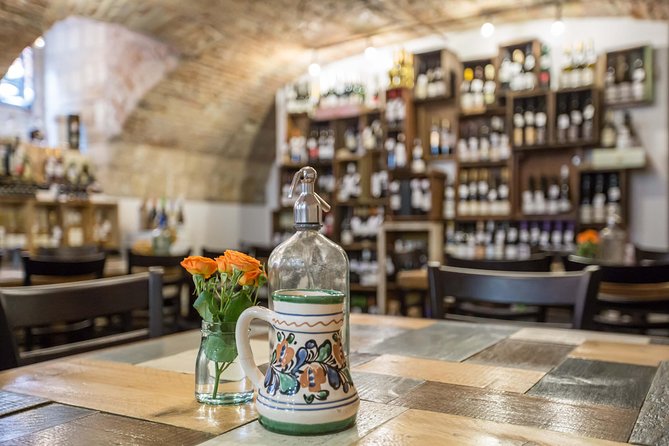
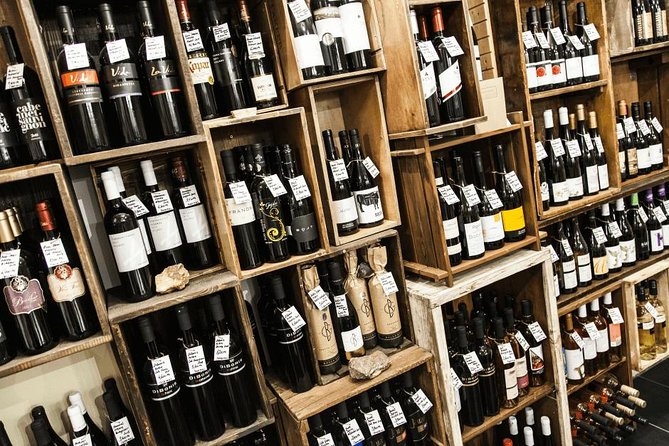
The best part of this tasting starts before the first sip. You meet at the Tasting Table Cellar (by Taste Hungary) at Bródy Sándor u. 9, 1088, and then you step into a cellar with vaulted ceilings from the 1800s. It sounds like a detail, but it matters. In a wine cellar, the room has character, and it helps you slow down just enough to pay attention to what the sommelier is teaching.
You’ll sit at communal tables in the tasting room. That setup can be a quiet blessing. Solo travelers can still talk, couples aren’t trapped in a corner, and you’ll likely share a table with a small mix of people from different places. The atmosphere is meant to feel relaxed and social, not like you’re being tested on wine vocabulary.
Time-wise, it runs about 1.5 hours, starting at 3:00 pm. That’s a great slot in Budapest, because you can do it before evening plans without feeling like you’ve lost the entire day to one ticket. It’s also offered in English, and you receive a mobile ticket, which keeps things simple.
If you like the idea of learning without turning it into homework, this format is built for you.
What You Actually Taste: Hungarian Grapes and Regional Styles
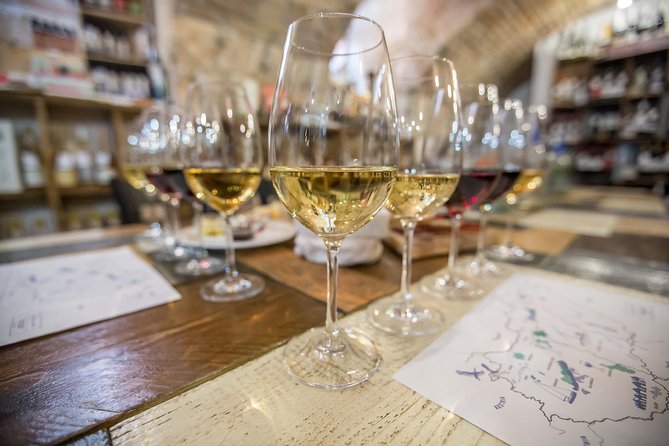
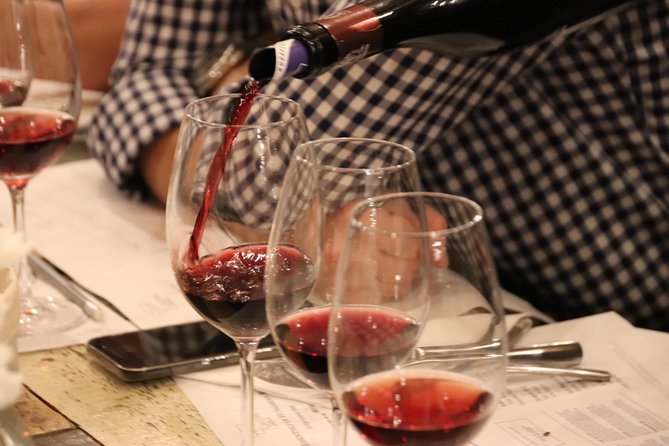
This isn’t a generic “red, white, repeat” flight. The tasting is centered on indigenous Hungarian grape varietals and how they behave in real vineyards. You’ll sip five generous glasses across different wines, and the guide explains what you’re tasting and why.
Here’s what that means in practice: you should come away with a clearer sense of how Hungarian wines are built around local grapes and regional character—not just around what’s popular in export markets. Hungary has a distinct wine identity, and part of the point here is to help you connect the flavors in your glass to the soils and growing traditions behind them.
One detail that shows up in the experience: people often mention finishing with a Tokaji-style wine. Even if you don’t already know Tokaji, you’ll hear enough context to make the final pours feel like a deliberate step, not an afterthought.
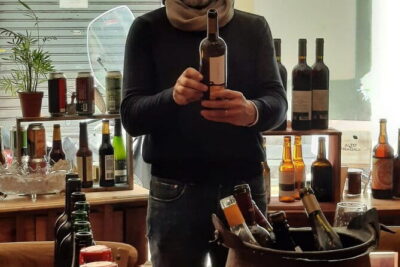
Also, the sommelier can take questions during the session. If you’re the curious type—thinking about acidity, dryness, sweetness, or why one wine tastes different than another from the same country—this kind of Q&A makes the tasting more valuable than a script-read presentation.
You can also read our reviews of more tours and experiences in Budapest.

Cheese and Charcuterie Pairings That Make the Wine Make Sense
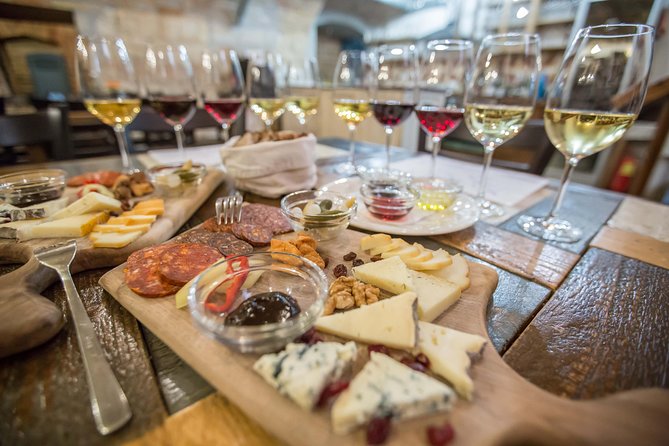
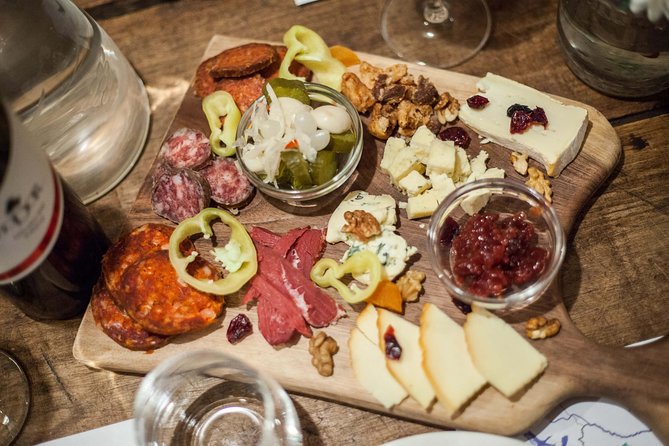
The food here is not just a snack to fill space between sips. You get a starter cheese and charcuterie board, and it’s paired to support the wines you’re tasting. You should expect 4 kinds of cheeses and 4 kinds of cured meats, along with fresh artisan bread and mineral water.
What makes this pairing portion especially interesting is the explanation around Hungarian charcuterie and cheese. You’ll hear how Hungary’s artisan food culture rebounded after the end of the Communist era—meaning this is presented as a story about craft and identity, not just “try this, it’s tasty.” That context helps you notice more. You start thinking about salt, fat, smoke, and texture—and how those traits change what you perceive in the wine.
The menu examples you may taste include items like beef sausage, smoked duck breast, free-range water buffalo salami, and Mangalica pork sausages. Those choices aren’t random. They add contrast: smoky flavors with one wine, richer cured textures with another, and softer cheese alongside something that needs a palate reset.
Balanced note: one consideration is that the board can feel like it has strong quality but not a huge amount of food for the price. If you’re the type who wants a big meal out of a ticket, you may leave wanting more food beyond what’s included. But if your goal is wine education and pairing, the food does the job.
Step-by-Step: How the 90-Minute Taste Hungary Session Flows
You’ll follow a simple structure, and that simplicity is part of the appeal. You’re in the cellar for about 90 minutes, and the session stays focused on one main segment.
Stop 1: Taste Hungary
This is the core experience, and it’s where most of the learning and tasting happen. The sommelier guides you through the theme of the night: Hungarian wine flavors plus the broader craft food scene.
Expect:
- A guided introduction to Hungary’s wine-making regions and how grapes behave there
- Explanations tied directly to what you’re tasting in each glass
- A cheese and meat pairing sequence built to help your palate understand the differences
- Time to ask questions about winemaking, grapes, and local traditions
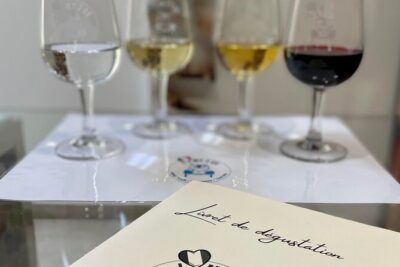
You’ll also get tasting sheets plus a map of Hungarian wine regions. That’s genuinely useful. After you leave, it helps you remember what you liked and where that style comes from. Otherwise, wine flights can blur together fast.
Pace is usually comfortable—many people feel they’re not rushed—but there is a common operational reality with group experiences: if the next session is ready, the timing can tighten. If you tend to linger, plan to ask questions early and pace yourself with the pours so you don’t feel like you’re chasing the schedule.
Value in Plain Math: Why This $50 Tasting Works
At $50 per person for roughly 1.5 hours, you’re paying for more than wine. You’re paying for:
- A professional sommelier leading the session
- 5 glasses of wine (not just sips)
- A substantial pairing plate with multiple cheeses and cured meats
- Bread and mineral water, so you’re not just tasting on an empty stomach
- Tasting sheets and a regional map, which turn a fun afternoon into something you can revisit later
In terms of value, the standout is the combination. Wine tastings can be either educational or food-forward, but here you get both in the same time block. You’re not paying extra to add the food later, and the food is not just filler—it’s tied to the wines.
Also, the setting has cost and effort behind it. A cellar like this isn’t just decoration. It’s part of the experience, and it gives you a reason to choose this over a casual tasting bar.
If you’re on the fence and thinking, Will I actually learn something? This is one of the better answers you’ll find in Budapest, because the guide is actively explaining grapes, regions, and winemaking decisions while you taste.
Who This Fits Best (And Who Might Want Another Option)
This tasting is a strong fit if you:
- Like your food to match your drink, not just sit beside it
- Want an introduction to Hungarian wines without getting lost in jargon
- Enjoy small-group tours where you can ask questions
- Are curious about how food and wine traditions changed after major political shifts
It can also be a good solo activity. Communal tables and a small group size (max 24) make it easier to talk and compare notes without feeling awkward.
What about limitations? If you’re trying to turn one ticket into a full meal, you may feel slightly underfed. One more consideration: the tasting experience is designed for adults 18+ in Hungary, and you’ll be drinking wine as part of the program.
Vegetarians are welcome, but you need to let them know in advance so alternatives can be prepared. If that matters to you, send the message early rather than assuming you’ll get a generic substitute.
A Practical Take on Pace, Board Size, and Comfort
Let’s talk about the “real life” parts. This is a structured tasting. You sit at communal tables. You taste in sequence. You learn in between pours.
Most people seem to enjoy the pacing, including time to actually taste and not feel like someone’s rushing you out the door. Still, with a group maximum of 24, and with multiple sessions cycling, there can be moments where you feel the flow tightening. If you’re the kind of person who wants to take notes slowly, I’d come in ready with a notebook or phone notes and expect the guide to keep moving through the lineup.
On the food side, quality appears to be a priority. The pairing ingredients include recognizable Hungarian cured meats and cheeses. But if you’re expecting a very large board for the price, calibrate your expectations. This is a tasting-and-pairing board, not a banquet.
Comfort-wise, you’re inside a cellar. That usually means stable conditions, but it’s worth dressing normally for indoor settings. If you’re sensitive to cold, bring a light layer.
Should You Book This Hungarian Wine and Cheese Tasting?
Book it if you want an afternoon in Budapest that mixes three things in one hour-and-a-half: local wine education, Hungarian artisan food, and a setting that feels more atmospheric than a typical tasting room.
Skip it only if you want a huge meal, or if you strongly prefer a fully customized menu where you control every ingredient. For everyone else, this is one of the more practical ways to learn what makes Hungarian wine and pairing choices distinct, without getting overwhelmed.
If you’re choosing between several wine tastings, I’d pick this one when you specifically want:
- indigenous Hungarian grapes and regional context
- a structured sommelier-led pairing
- a memorable cellar environment
FAQ
How long is the Hungarian Wine Tasting with Cheese and Charcuterie in Budapest?
It lasts about 1.5 hours.
Where does the tasting start?
It starts at Tasting Table Cellar (by Taste Hungary), Bródy Sándor u. 9, 1088 Hungary.
Is the tasting offered in English?
Yes, it’s offered in English.
What’s included in the price?
You get 4 kinds of cheeses, 4 kinds of cured meats, 5 glasses of wine, plus fresh artisan bread and mineral water, guided by a professional sommelier.
Is there a minimum age requirement?
Yes. The legal drinking age in Hungary is 18, so participants must be 18 or older.
Are vegetarians able to join?
Yes. Vegetarians are welcome, but you need to let them know in advance so alternatives can be prepared.
How big is the group?
The tasting has a maximum of 24 travelers and uses communal tables.
Do I need to know wine before I go?
No. It’s designed so you don’t need to be a wine expert to enjoy the tasting, and the guide talks through wine regions and what you’re tasting.