REVIEW · BORDEAUX
Tasting of Bordeaux red wines, wine and charcuterie pairings
Book on Viator →Operated by I love my 2cv · Bookable on Viator
A great Bordeaux red lesson fits in one hour. This tasting is built around Left Bank vs Right Bank style, with an expert walking you through what to smell and taste, plus wine and charcuterie pairings you can actually learn from. You’ll cover Bordeaux’s big red-roots without needing a vineyard-side detour.
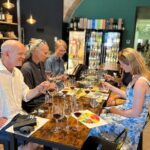
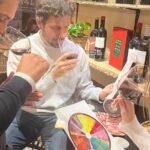
I really like how it stays small. With a maximum of six people, the hosts—often Mathilde and Cécilia—can slow down for your questions and tailor the tasting to your preferences. I also like that you taste four different wines plus a surprise glass, instead of doing the usual one-note tour.
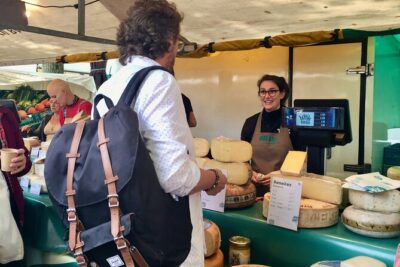
One thing to consider: the pairing is charcuterie-focused, and it may not include what you’d expect if you’re a cheese lover. It’s still good value for the education, but go in knowing meat-based bites are the main game.
In This Review
- Key Things That Make This Bordeaux Tasting Worth Your Time
- Why This Bordeaux Tasting Works in One Hour
- Your Hosts in Bordeaux: Mathilde, Cécilia, and Ilona
- Four Reds, Two Worlds: Left Bank vs Right Bank
- How the Pairing with Charcuterie Teaches You More Than It Sounds
- The Mystery Glass and the Mature Wine Lesson on Aging
- Where It Happens: Stone Rooms, Private Courtyards, and Cellars
- What You Get After: the Tasting Booklet and Next Steps
- Price and Value: What $46.99 Buys You
- Who Should Book This Bordeaux Red Wine and Charcuterie Tasting
- Should You Book This Bordeaux Wine Tasting?
- FAQ
- How long is the Bordeaux red wine tasting?
- How many wines do you taste?
- What is the group size?
- Is it offered in English?
- Where is the meeting point?
- What are the cancellation terms?
Key Things That Make This Bordeaux Tasting Worth Your Time
- Small group (max 6) so you actually get time to ask questions
- Four wines plus a mystery glass to sharpen how you recognize styles
- Left Bank vs Right Bank explained with real examples like Médoc and Saint-Émilion
- Charcuterie pairings that show how food changes aromas and texture
- A mature wine moment so you learn what aging does in Bordeaux
- Take-home tasting booklet to keep your notes and compare bottles later
Why This Bordeaux Tasting Works in One Hour
If you only have a short window in Bordeaux, this is a smart way to spend it. The format is tight: about one hour, tasting-focused, and designed to teach you how to taste rather than just pass out sips and labels.
Bordeaux can feel like a maze when you first arrive. You’ll hear terms like Left Bank, Right Bank, Médoc, Saint-Émilion, Cabernet Sauvignon, Merlot, blends, and aging—and it can all sound like wine trivia. Here, the structure helps it click: you taste, you compare, and you get explanations that connect grape variety, terroir, and winemaking choices to what’s in your glass.
I also like the pace. It’s short enough that you don’t get fatigued by back-to-back explanations, but long enough to do real comparison across four carefully chosen reds and food pairings. That balance matters. Too many tastings either rush the teaching or drag the sipping.
You can also read our reviews of more tours and experiences in Bordeaux.

Your Hosts in Bordeaux: Mathilde, Cécilia, and Ilona
The biggest quality jump in any wine experience is the host’s ability to explain without talking down. In this one, the hosts are certified experts, and the teaching style comes through in the way the tasting is paced and personalized.
You may meet Mathilde or Cécilia, and other hosts like Ilona also come up in practice. What you can expect from a good host here is not just facts, but a way to train your senses. Multiple people highlight clear, flexible explanations—especially around how to recognize grapes, how aromas change with aging, and how food pairing shifts the experience.
One practical advantage: they can adjust based on your preferences. That means if you’re more curious about structure and tannins, or you lean toward softer, fruit-forward reds, you’re not stuck following a rigid script. In a small group setting, that kind of flexibility is rare.
Four Reds, Two Worlds: Left Bank vs Right Bank
This tasting is built on one of the most useful Bordeaux shortcuts: Left Bank vs Right Bank. You start with the idea that Bordeaux’s reds are not one style. They’re a set of styles with a regional personality.
On the Left Bank, the classic direction is structured Cabernet Sauvignon—tied to the Médoc style. You’re essentially learning how that family of grapes often shows more structure, grip, and a more defined backbone. On the Right Bank, the classic direction is softer and fruit-forward Merlot from Saint-Émilion. The goal is not to memorize a rule. It’s to train your palate to recognize the difference in texture and aromatic profile.
You’ll taste four wines that can include mono-varietals or blends, from family estates in organic contexts or from Grand Crus, depending on what’s available for the session. The tasting isn’t just variety names on a card; it’s paired with guidance on what to notice—bouquet, texture, and how those signals show up in the glass.
Then comes the fun part: a mystery glass. That’s a great tool because it forces your attention. Instead of passively waiting for the answer, you practice tasting your way through the clues. It also makes the whole session feel like a lesson you’ll want to repeat later.
How the Pairing with Charcuterie Teaches You More Than It Sounds
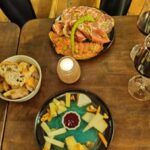
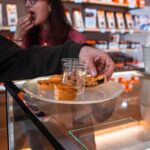
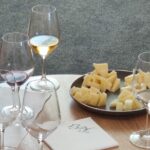
Most wine-and-food pairings sound like a fancy extra. Here, the charcuterie pairings are part of the education. Each wine comes with a delicatessen bite that matches its flavors, so you can see how taste changes when food enters the equation.
This matters for two reasons.
First, Bordeaux reds often have tannins and flavor layers. Food can soften tannin feel, bring out fruit notes, and even shift what you perceive as spice or acidity. If you’ve ever wondered why a wine tastes good alone but strange at dinner, this is your explanation.
Second, it teaches you a tasting skill you can reuse. When you’re guided to compare the wine in isolation versus with a bite, you start building your own sense of balance: salt versus fruit, fat versus tannin, and aroma versus texture.
Quick heads-up: one minor note from a past experience is that the charcuterie may be meat-focused and cheese might not be part of the spread even if you expect it. If you’re a strict cheese person, just adjust your expectations and treat this as charcuterie-forward pairing.
The Mystery Glass and the Mature Wine Lesson on Aging
Two moments make this tasting feel like more than a quick flavor parade: the mystery glass and the mature wine.
The mystery glass is there to test recognition. It’s not about getting every answer right. It’s about teaching you how to slow down, smell with intent, and describe what you’re tasting. Over time, that kind of practice is what turns wine from random labels into patterns you can trust.
The mature wine is the aging lesson. Bordeaux is famous for aging potential, but most people don’t get a concrete feel for what that means on the tongue. You’ll learn how aromas and textures can shift as wine develops, and you’ll get the practical idea that aging isn’t only about time—it’s also about decisions made in the vineyard and cellar.
A good way to use this part as you listen: try to separate what changes from what stays. Many people notice that certain fruit tones fade, while other notes—often related to complexity—take their place. That gives you a grounded way to decide what to buy and what to drink now.


Where It Happens: Stone Rooms, Private Courtyards, and Cellars
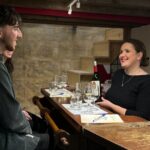
The location is flexible. Depending on the season, your tasting may take place in a stone room, a private courtyard, or a cellar. That isn’t just a setting detail—it can change the vibe and even how comfortable you feel.
- In cooler months, a stone room or cellar can be a good fit, but expect it to feel more closed and focused.
- In milder seasons, a courtyard setup can feel lighter, which helps if you’re sensitive to cramped spaces.
It’s also worth noting that sessions adapt for white lovers when needed. So if you’re in the group with someone who doesn’t want all-red all the time, you’re not automatically locked into a full red-only ride.
What You Get After: the Tasting Booklet and Next Steps
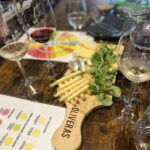
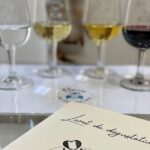
You don’t just leave with memories. You leave with a tasting booklet. It’s a practical souvenir because it turns the experience into something you can use later when you’re shopping or ordering wine in Bordeaux.
The booklet is personalized based on the session flow. That’s valuable because wine learning sticks better when you can connect a bottle to your own notes. You’ll also get help translating what you tasted into buying decisions—especially when it comes to choosing styles linked to the Left Bank and Right Bank directions.
One more practical detail: wines are available for sale. That can be convenient if you want to recreate the experience later. If you’re unsure what to buy, the best move is to use your tasting booklet as a guide while you consider bottles.
Price and Value: What $46.99 Buys You
For $46.99 per person, you’re getting a compact, high-touch experience with real content: four wines, snack pairings, a mystery pour, and a mature wine aging lesson—all guided in English by expert hosts.
Is it expensive compared to pouring wine in a bar? Sure. But it’s usually cheaper than a full-day vineyard trip and more useful than a random tasting where you’re left alone with your glass.
You’re also paying for structure. In a small group, you get time to ask questions and learn what to look for next time. With max six people, it doesn’t feel like you’re part of a production line. That’s the part you can’t replicate by buying a few bottles on your own.
Given the included wine variety, the food pairing, and the booklet, I think the price is fair for people who want a genuine Bordeaux skill—not just a sip.
Who Should Book This Bordeaux Red Wine and Charcuterie Tasting
This is a strong fit if:
- You’re a wine lover of any level and want a clear Bordeaux framework fast
- You want to learn styles tied to Médoc and Saint-Émilion without leaving the city
- You enjoy hands-on tasting with explanations you can ask questions about
- You like pairings that teach you how food changes what you think you’re tasting
It’s especially good for couples or small groups because the experience stays personal. If you’re traveling solo and want a friendly, guided session rather than a lecture, the small group format helps you feel included.
If you want a high-volume tasting where you meet lots of people and sample tons of wines, this may feel more focused than expansive. But if you want accuracy and learning in a short window, it’s ideal.
Should You Book This Bordeaux Wine Tasting?
Book it if you want a well-structured Bordeaux lesson you can carry into future bottle choices. The combination of Left Bank vs Right Bank, a hands-on mystery glass, a mature wine aging moment, and charcuterie pairings makes it feel like a real tasting class that happens to be fun.
Skip it or adjust expectations only if you’re expecting a cheese-heavy spread, or if you need a long, slow vineyard day instead of a city-based, time-efficient experience.
If you’re in Bordeaux for a weekend and you want your wine time to be useful, I’d put this near the top of the list.
FAQ
How long is the Bordeaux red wine tasting?
It runs for about 1 hour.
How many wines do you taste?
You taste four different wines, plus you also get a mystery glass and a mature wine as part of the session.
What is the group size?
The experience has a maximum of 6 travelers.
Is it offered in English?
Yes. English is offered, and there is a mobile ticket.
Where is the meeting point?
The start is at 25 Av. Thiers, 33100 Bordeaux, France, and the tour ends back at the meeting point.
What are the cancellation terms?
You can cancel for a full refund if you cancel up to 24 hours in advance. If you cancel less than 24 hours before the start time, the amount paid is not refunded.