REVIEW · PARIS
French wine & Champagne & cheese tasting – back on GYG!
Book on GetYourGuide →Operated by SECRET WINE DOOR · Bookable on GetYourGuide
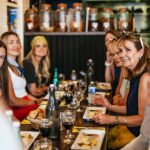
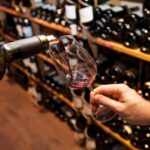
This is wine learning with a smile. At Secret Wine Door in Paris, Erwan runs an intimate max-16 tasting where you practice ordering French wine while tasting Champagne and carefully paired cheeses.
I like how much hands-on guidance you get in only 2 hours. A key consideration: it’s 18+ only, so plan this as an adults’ tasting night, not a family outing.
In This Review
- Key highlights at a glance
- Secret Wine Door: A Paris shop tasting that feels personal
- How the 2-hour tasting is structured (without the classroom feel)
- What’s in your glass and on your plate: Champagne, independent wines, artisan cheese
- Pairing tips you can actually use at home
- Learning to order French wine: practical, not intimidating
- Erwan’s approach: WSET training, humor, and real conversation
- Finding the shop near the Eiffel Tower (and making it easy on yourself)
- Price and value: $81 for Champagne, wines, cheese, and bread
- Who should book this wine and Champagne pairing
- Should you book French wine, Champagne, and cheese at Secret Wine Door?
- FAQ
- FAQ
- How long is the French wine and Champagne & cheese tasting?
- What’s included in the tasting?
- Can I attend if I don’t eat cheese?
- Is the tour guide available in English?
- How many people will be in the group?
- Where do I meet the guide?
- How do I get there by metro?
- Is it suitable for children?
- Are pets allowed?
- What’s the price per person?
Key highlights at a glance
- Max 16 people in a cozy, non-classroom shop setting
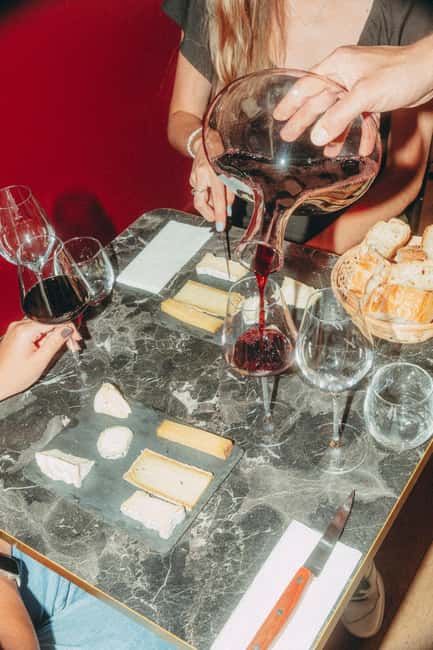
- 1 Champagne + 5 French wines (white, red, and sometimes rosé in summer)
- Independent producers only for the wine selection
- 6 artisan cheeses from smaller producers, with a charcuterie swap if you don’t eat cheese
- Unlimited traditional baguette to keep the tasting relaxed
- WSET-trained host Erwan with real-world tips for tasting and ordering wine in France
Secret Wine Door: A Paris shop tasting that feels personal
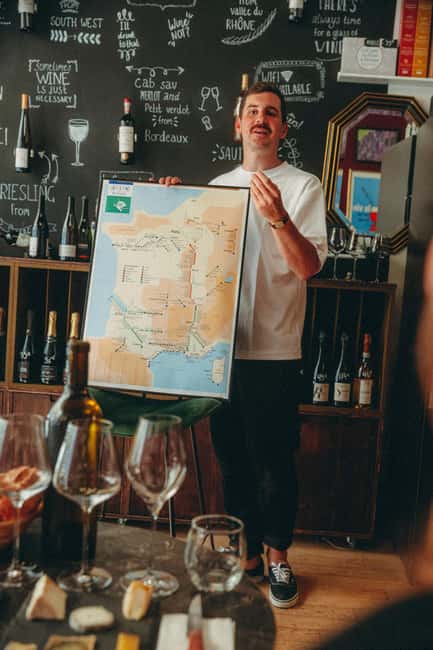
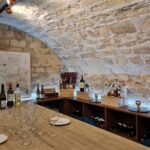
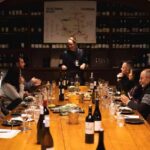
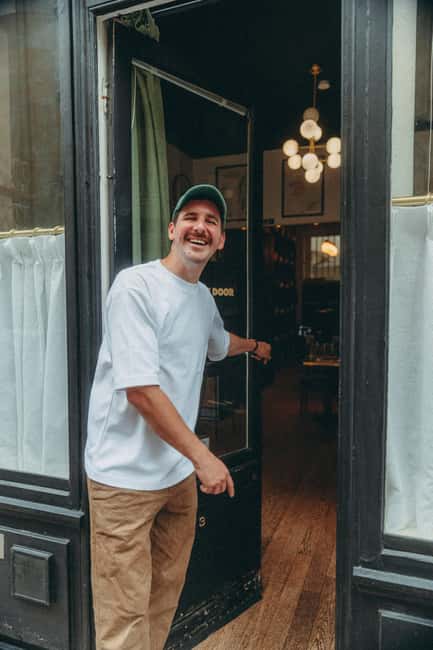
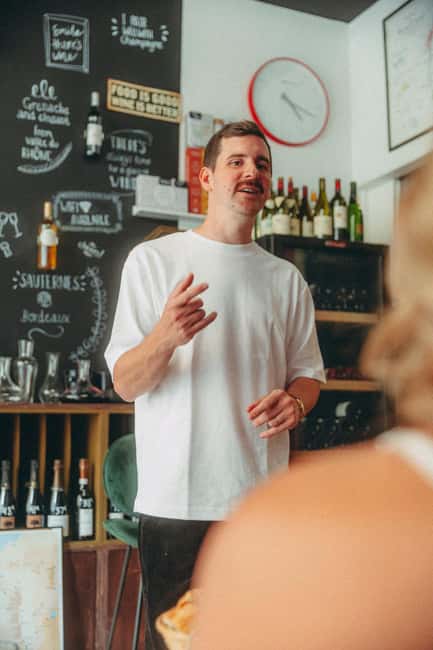
Paris can be loud and rushed. This experience is the opposite. You meet in a black shop marked with a sticker for Secret Wine Door, in the 15th arrondissement, and the vibe is designed to feel like a friendly sit-down rather than a lecture.
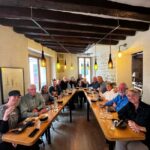
What makes it work is the scale. With a maximum of 16 people, you get room to ask questions and actually connect what you’re tasting to what you’ll do later. That small-group format matters because wine education sticks better when you can react, compare, and ask for clarity.
The setting also gives the tasting a “real life” feel. It’s not in a showroom lined with display boards. It’s in Erwan’s cozy shop, where the focus stays on the bottle, the cheese, the bread, and the conversation around them.
You can also read our reviews of more tours and experiences in Paris.


How the 2-hour tasting is structured (without the classroom feel)
The whole session is built around a simple idea: you should be able to taste confidently at home and order with ease in France. That shows up throughout the tasting in three ways.
First, you get Champagne plus five French wines, so you’re not just sampling one style. Instead, you build a quick mental map of how Champagne and other French wines can feel different, from aroma to finish.
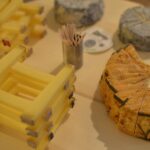
Second, you taste 6 cheeses from smaller producers. The pairing isn’t about fancy theory. It’s about learning what to do with your palate when flavors clash or when they click.
Third, you get guidance on how to taste like a pro. Even if you’re new to wine, you’ll leave with a repeatable routine and a few practical habits you can use next time you’re buying wine or hosting friends.
The pace is important. This is a 2-hour experience, which means you get enough time to learn, but it stays friendly and digestible. If you’ve ever felt like wine tastings move too slowly or too fast, this format is sized for people who want results.
What’s in your glass and on your plate: Champagne, independent wines, artisan cheese
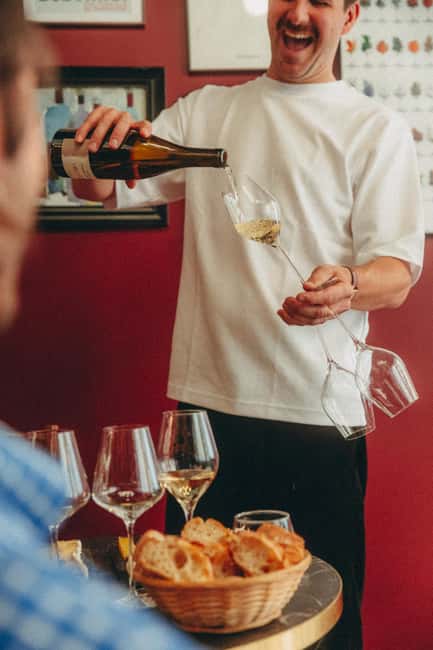
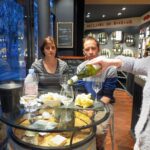
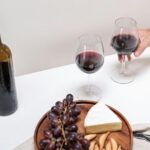
This is not a generic “French wine flight.” Your tasting includes:
- 1 Champagne
- 5 French wines (a mix of whites and reds, with rosé sometimes in summer)
- 6 artisan cheeses (small producers)
- Unlimited traditional French baguette
- A charcuterie option if you do not eat cheese
That cheese selection from small producers is one of the biggest quality signals here. Big-brand cheese can be fine, but small producers often show up with more character and less predictability. That makes the pairing lesson more useful, because you’re not just learning one flavor profile.
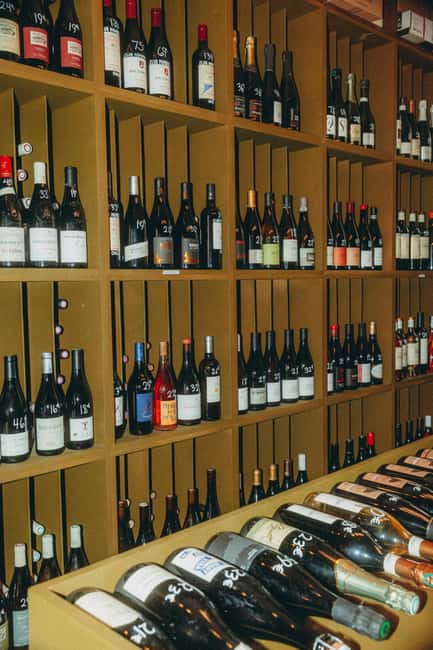
Then there’s the wine choice rule: the wines are from independent producers only. This isn’t a minor detail. Independent growers and small producers often prioritize careful vineyard work and hands-on winemaking, and that usually shows in the glass. For you, it means the tasting is more about discovering bottles you might not stumble upon on your own.
And yes, the baguette matters. Unlimited traditional baguette is not just filler. In a tasting packed with acidity, fat, salt, and funk, bread helps you keep your palate balanced so you can notice changes between pours instead of getting stuck.
Pairing tips you can actually use at home
The pairing is where this experience earns its reputation. You’re not just tasting wine and cheese in parallel. You learn how to think about matches, and you get repeatable cues.
Here’s what the format encourages you to notice:
- How Champagne works with salty and creamy flavors
- How white wines can handle sharper or tangier cheeses
- How red wines change when paired with richer, aged, or funkier cheese
Even if you don’t become a cheese snob overnight, you’ll start using better questions. Instead of asking What wine should I buy? you start asking What am I trying to balance? That shift is the real takeaway.
If you love cheese, you’ll likely walk away with a new favorite category. One recent highlight was that a guest ended up loving goat cheese, which is exactly the kind of outcome a good pairing lesson can trigger. The point is not that goat cheese is always included, but that the tasting helps you recalibrate your preferences quickly.
And if you don’t eat cheese, you still get a full session. The experience allows a charcuterie swap, so you’re not forced into skipping parts of the pairing logic.
Learning to order French wine: practical, not intimidating
A lot of wine tastings teach you how to describe flavors. This one goes further. It focuses on how to order French wine and how to manage wine at home.
In France, the challenge for many visitors is simple: menus and wine lists can feel overwhelming, and you might not know what questions to ask. The goal here is to give you the kind of phrasing and thinking that helps you stop guessing.
What you’ll gain is a more confident approach:
- how to choose a wine that fits your food rather than just your mood
- how to talk through preferences without sounding lost
- how to taste what you’re given so you can adjust your next choice
You’ll also learn about wine handling at home. That’s one of those skills that sounds boring until you use it. Knowing how to keep a bottle tasting good after opening (and how to store it properly) can make a huge difference between a good dinner and a disappointing bottle that went flat too fast.



Erwan’s approach: WSET training, humor, and real conversation
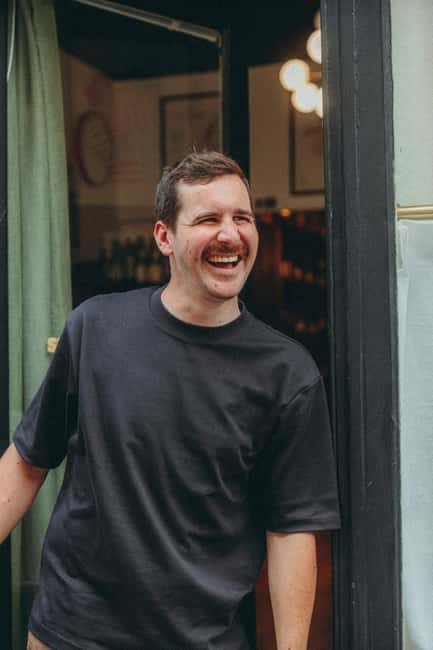
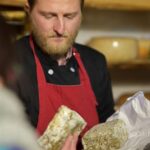
Erwan is a certified wine expert from WSET, and the teaching style reflects that credential without turning stiff. The tone is relaxed, with room for anecdotes and light humor. That matters because wine is partly sensory, and your brain learns faster when you’re comfortable.
In a setting this small, the guide can tailor moments as people ask questions. That’s why the pairings and explanations land. When you can hear how someone else is reacting to a cheese or a wine, you sharpen your own taste.
It also helps that the experience isn’t trying to make you memorize terms. You’ll get the basics and then the application: what to taste, how to pair, and how to translate that into real buying decisions.
One extra perk: the host may share suggestions for where to go for dinner afterward. That’s not a formal part of every tasting, but it’s the kind of local touch that makes your evening feel connected rather than accidental.
Finding the shop near the Eiffel Tower (and making it easy on yourself)
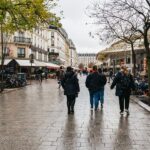
Location is part of the value here. The shop is about a 15-minute walk to the Eiffel Tower, and you’re in a central area of Paris where getting oriented doesn’t feel like a scavenger hunt.
There’s also a fun detail that adds personality to the walk. The shop is on the same street where the movie Inception was filmed. Even if you’re not a film buff, it’s an easy way to make the area feel more specific than just Eiffel Tower equals Paris.
Getting there by metro is straightforward:
- Metro line 10 to Ségur, then about a 2-minute walk
- Metro line 6 to Sèvres-Lecourbe, then about a 4-minute walk
If you’re pairing this with other sights, I’d plan around the 2-hour block and keep the rest of the evening flexible. This is the kind of experience where you’ll want time to wander afterward with your palate awake and your questions answered.
Price and value: $81 for Champagne, wines, cheese, and bread
At $81 per person for a 2-hour tasting, you’re paying for more than drinks and snacks. You’re paying for:
- 1 Champagne plus five French wines
- 6 artisan cheeses (not just a token bite)
- Unlimited baguette
- A guided, small-group learning session led by a WSET-certified expert
- Practical advice aimed at what you’ll do next, not just what you liked today
If you try to replicate this on your own in Paris, the cost can climb fast once you factor in multiple bottles, proper cheese portions, and guided structure. Here, your money buys the “how” as much as the “what.”
The independent-producer focus is also part of the value. You’re not paying for a standard mass-market flight. You’re paying to taste selections that reflect a specific approach to French wine and cheese.
Who should book this wine and Champagne pairing
This experience fits best if you:
- want a small-group tasting rather than a big crowd experience
- like practical learning you can use when ordering wine in France
- enjoy cheese pairing and want to taste from smaller producers
- want Champagne and French wines in a single, friendly session
It’s probably not your best match if you’re traveling with children under 18, because the tasting isn’t suitable for them. It’s also not the right pick if you travel with pets, since pets aren’t allowed (assistance dogs are permitted).
One smart question for yourself before booking: do you want a wine evening that gives you skills? If yes, you’ll likely appreciate how the session is designed to teach you how to think, not just how to sip.
Should you book French wine, Champagne, and cheese at Secret Wine Door?
Book this if you want a relaxed Paris experience that teaches you real-world wine confidence. The combination of independent-producer wines, small-producer cheeses, and a guide like Erwan who’s trained through WSET is exactly the recipe for learning without pressure.
Skip it only if adult-only tastings are a dealbreaker for your group, or if you prefer a more formal, lecture-style wine class. Otherwise, this is a strong choice for anyone who wants to leave Paris feeling able to order French wine with actual understanding, not guesswork.
FAQ
FAQ
How long is the French wine and Champagne & cheese tasting?
The tasting lasts 2 hours.
What’s included in the tasting?
You get 6 wines (1 Champagne plus a mix of white and red wines, with rosé sometimes in summer), 6 artisan cheeses, and unlimited traditional baguette.
Can I attend if I don’t eat cheese?
Yes. If you do not eat cheese, the tasting can include charcuterie instead of the cheese course.
Is the tour guide available in English?
Yes, the tour is guided in English.
How many people will be in the group?
The experience is intimate, with a maximum of 16 people.
Where do I meet the guide?
You meet at a black shop with a sticker that says secret wine door on the door.
How do I get there by metro?
You can take metro line 10 to Ségur (then walk about 2 minutes), or metro line 6 to Sévres-Lecourbe (then walk about 4 minutes).
Is it suitable for children?
No. It is not suitable for children under 18.
Are pets allowed?
Pets are not allowed. Assistance dogs are allowed.
What’s the price per person?
The price is $81 per person.